
What a Broken Leg Taught Me About Interdependence, Vulnerability, and the Credit Union Movement’s Core Purpose

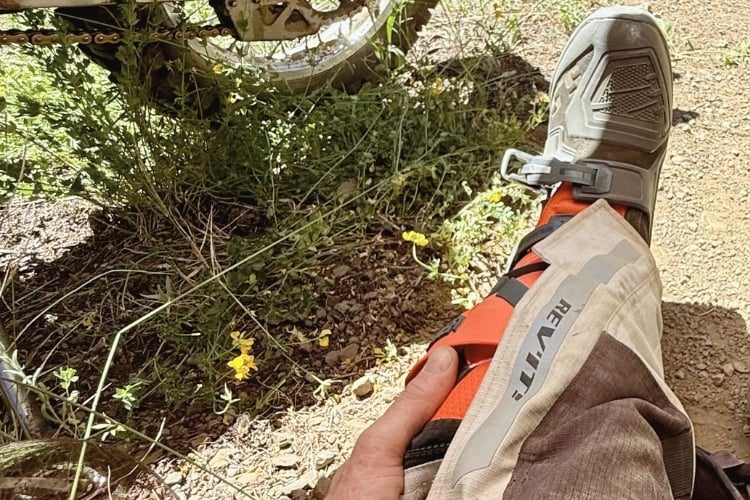
Back in July, I set off with a friend on what was supposed to be a week-long off-road motorcycle camping trip from Oregon to Canada. For the first four hours, things went swimmingly. The weather was perfect, the planning and prep were behind me, and I was able to snatch stunning views of mountains peeking through the trees.
This was a route I had done before, and there was nothing technical about the trail at that point. But suddenly my back tire hit a rut in the trail and the bike spun around, landing on top of me. My lower left leg went in a direction it should not have gone. I knew immediately that it was broken. I crawled out from underneath the bike, and once the adrenaline subsided, I put on my “project manager” hat to figure out what to do next.
Waiting several hours for search-and-rescue on that rocky mountainside gave me plenty of time to reflect on what had just transpired, as well as my suddenly-cancelled summer plans. Returning home after surgery a few days later, my spouse asked what lessons I had taken away—perhaps expecting me to say I would never ride again.
But my perspective was different. Sitting on that mountain, I realized I could choose how to respond to my situation—the pain, the recovery, and the most challenging aspect for me—relying on others.
I subscribe to the idea that everyone is trying to do their best, but even with the best of intentions, sometimes individuals take risks or make choices that affect others around them. This realization came into sharp focus for me as I sat on that mountainside holding my broken leg. I’ve long been well aware that my hobby of off-road motorcycling is a calculated risk. It’s important to prepare physically and mentally, hone riding skills, wear protective gear, understand what could go wrong—and then go have a good time anyway.
But I was not the only person affected by my choice. I have been extremely fortunate to enjoy the support of my spouse, friends and coworkers throughout my recovery. To ask for help when you need it means stepping past pride and independence to lean into your vulnerability and place your trust in others.
Within the credit union movement, there is sometimes frustration that members who are financially struggling aren’t more proactive about seeking guidance and support. One story recently stood out to me. At PixelSpoke, we hold quarterly client roundtables, during which we share what we are learning in the credit union space and during which our clients share top-of-mind challenges and opportunities, like rampant fraud, the use and implications of AI, related AEO/SEO strategies, and overall relevance in a sea of competing financial institutions and regulatory changes.
During our last client roundtable about fraud, a client shared that one of their co-workers had recently engaged in a very emotional, four-hour call with one of their members. The member had almost fallen prey to a scam, and the member service representative had taken on the role of coach, advocate, and a shoulder to lean on.
This story is a snapshot of the interactions that happen every day at credit unions everywhere. Our credit union teams willingly (and often quietly) carry the emotional labor of supporting community members who need them most. Serving as that trusted resource is a genuine privilege, but it demands energy and a willingness to take risks from both credit union staff and the communities we serve.
Our members are struggling with everything from basic finances, to getting kicked off their homeowners insurance policy because of climate instability, to accessing online banking on a 3G connection in a remote location—and there are plenty of emotions around all of these challenges.
As Jamie Chandler, SVP of Program Initiatives & Strategic Partnerships at The Opportunity Initiative & Opportunity Knocks on PBS shared in a recent episode of The Remarkable Credit Union podcast: “It’s important for us to acknowledge the emotional weight of money. Money is deeply tied to life events and relationships, so frontline staff undergo heavy emotional labor that credit unions must actively support. Coaching sessions can uncover intense human baggage — including shame, fear of exposure, and grief — and can even escalate to crisis levels.”
Financial wellness expert Manisha Thakor echoed this sentiment in another podcast episode, emphasizing that “money is almost never about money… I was helping a couple, and the wife was literally feeding a family of four on $100 a week. It was shocking, and she and her husband are having some tension. And finally, I couldn’t stop myself. I blurted out, ‘It’s not about the money, Dawn and Chris. It’s not.’”
Many community members face steep obstacles and may hesitate to trust someone enough to engage in a lengthy four-hour interaction, whether over the phone or in person. Every member’s situation is unique. By centering the needs of our most vulnerable members, working to remove stigmas, and collecting qualitative insights alongside data to identify and dismantle barriers, we can help foster an environment where our teams step up as the dependable partners our members need right when it matters most.
Helping to overcome the barriers our members face then becomes our primary charge. Reducing credit unions to their products doesn’t capture the critical resources they provide—they are doing so much more for their communities than providing checking accounts.
Just as my friends and family have pitched in to support me over these last few challenging months, credit unions show up every day in moments of critical need. It’s not altruism, it’s good business. When we take care of each other, we all have more to give. As John Felton, CEO of Southern Chautauqua Federal Credit Union pointed out, “It is important to do good in your neighborhood because you will do well while you're doing good in your neighborhood.”
Learning to trust and rely on each other in moments of uncertainty, vulnerability, and need is where true resilience begins.
This story originally appeared on CUInsight.