When it comes to financial inclusion, there are the credit unions that are checking boxes, and there are the credit unions that are doing the raw, messy, uncomfortable, long-term work. Greylock Federal Credit Union falls squarely in the latter category.
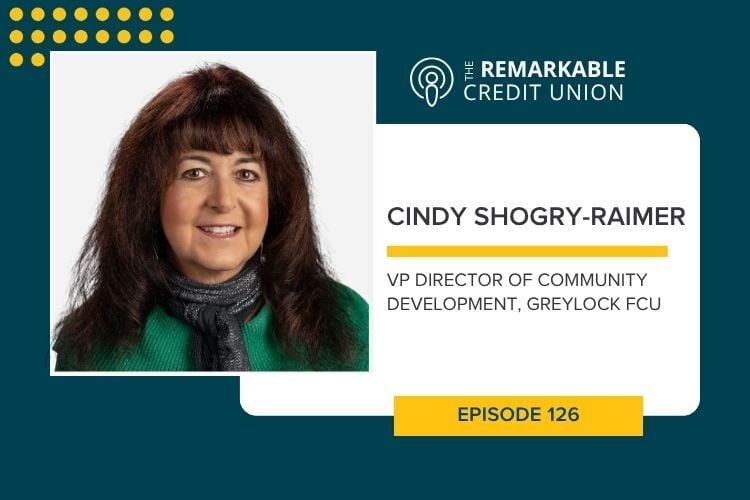
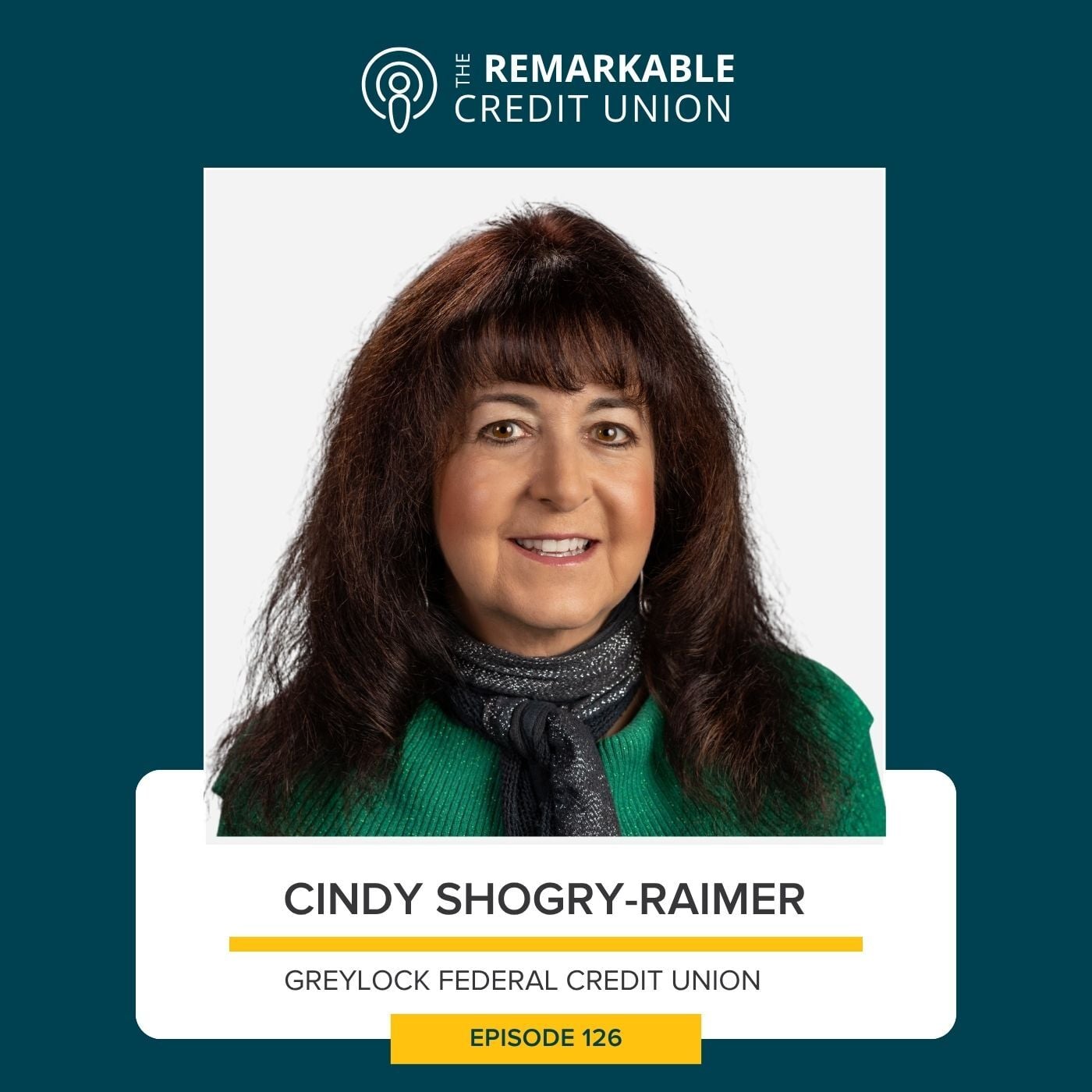
In our latest episode of The Remarkable Credit Union podcast, we sit down with Cindy Shogry-Raimer, Greylock's VP Director of Community Development, to discuss the credit union's IDEA (Inclusion, Diversity, Equity, and Accessibility) framework and the bold steps they have taken to approach this work in ways that yield meaningful impact. We also delve into this month's BIG question:
What are the key differences between a credit union that pays lip service to inclusion and a credit union that actively embeds inclusive practices at all levels of the organization — and the community at large?
Key takeaways:
- It's time to move beyond performative DEI or IDEA work: There was a period of time in our recent history when DEI work became rather trendy, and though that’s certainly preferable to the backlash we’ve experience since, a lot of that work was only surface-level, at best. True commitment requires intentional program development across the company, not just in a silo, and a recognition that this work requires ongoing time, attention, and resources. You’re never going to check a box and be done.
- Establish mechanisms for direct community input: Creating a Community Development Advisory Committee (CDAC) that includes diverse community members allows for raw, honest feedback. This is feedback that goes far beyond the “how are we doing” member service feedback and challenges the assumptions baked into Greylock’s products, programs, and services.
- Use data to uncover and address barriers: Qualitative feedback is important, but it’s even better if we can back it with data. Conducting deep dives into lending data, such as commissioning a redlining report, can reveal systemic historical inequities that continue to impact the community Greylock serves. It’s a vital call to action for leadership to pivot strategies, address barriers, and better serve marginalized groups.
Resources & links:
- Greylock Federal Credit Union — The financial institution where guest Cindy Shogry-Raimer works as VP and Director of Community Development.
- Inclusiv — Organization supporting community development credit unions.
- Citadel Federal Credit Union redlining lawsuit: DOJ Reaches Historic Multi-Million Dollar Redlining Settlement With Citadel Federal Credit Union
- IDEA Framework — A guiding framework used by Greylock Federal Credit Union that stands for Inclusion, Diversity, Equity, and Accessibility.
- Redlining Report — A report commissioned by Greylock Federal Credit Union to examine historical lending practices in their community.
- Lenten Labor of Love Project — An annual charity event run by Cindy Shogry-Raimer that creates care packages for local shelters
Read the transcript:
Katie Stone:
Welcome to another episode of The Remarkable Credit Union podcast. We created our podcast to help credit union leaders think outside of the box about marketing, technology, and community impact. The Remarkable Credit Union is brought to you by PixelSpoke, a digital marketing agency that works with credit unions to create user-friendly, high converting, award-winning websites. As a B Corp and an employee-owned cooperative, we believe that business can and should be a force for good.
Each episode, we bring on expert guests from the credit union and broader cooperative movement for conversations about the intersection of marketing and social impact. Our goal is to challenge your preconceptions about business as usual and provide you with actionable takeaways that you can use to grow your membership, improve the financial health of your cooperative, and better serve your community.
I'm Katie Stone, CEO and one of the co-owners here at PixelSpoke.
Kerala Goodkin:
And I'm Kerala Goodkin, a co-owner as well, and the Director of Marketing and Impact at PixelSpoke. Today, we are excited to dive into our big question, which is what are the key differences between a credit union that pays lip service to an inclusion and a credit union that actively embeds inclusive practices at all levels of the organization and beyond in the community at large? To help us answer this very big question, I am excited to introduce a Cindy Shogry-Raimer.
Cindy is the VP and Director of Community Development at Greylock Federal Credit Union. She has been with Greylock for 40 years, starting as a teller. I think she's the third guest on our podcast this year to have started out as a teller many, many years ago. She has held a series of leadership positions throughout her career, which includes Supervisor of Deposit Operations, Regional VP of Central County, Internal Auditor, and VP of Operational Risk. Cindy is also a certified credit union financial counselor, and she serves on multiple boards in her community. She also serves on the BCC Scholarship Review Committee and Inclusive's Juntos Avanzamos Selection Committee.
And because that's not enough, Cindy also runs her own annual charity event, the Lenten Labor of Love Project, which creates health and beauty aid care packages that are distributed to homeless shelters and organizations throughout Berkshire County. Wow. Cindy, thank you so much for joining us.
Cindy Shogry-Raimer:
Thank you. It's a pleasure and an honor to be here with you today and talk about the great work being done over here at Greylock.
Katie Stone:
Yeah. With that list of things you're involved in, I just want to say thank you for taking the time to meet with us. I'm sure you have a very, very busy calendar.
Cindy Shogry-Raimer:
I don't sleep much. It's overrated.
Kerala Goodkin:
Yeah. We were talking before we started this recording about how Katie saw you speak at the inclusive conference back in May and was just really blown away by your passion. So we're really excited to have you bring that passion to our podcast.
I'm curious first just to learn a little bit more about your current role at Greylock. You've worn many hats there. I know you've spent quite a while in risk management, which is arguably pretty different from community development. I'm just curious what inspired you to make that transition.
Cindy Shogry-Raimer:
Oh, absolutely. I was very good in risk because I do like to help people fight, get around fraud, how to detect it, what to do to protect themselves. But I'm an empath, and dealing with fraud and just seeing greater schemes and just really targeting so many vulnerable people was really chipping away at my soul. Plus, there's a lot of audit work, there's a lot of compliance, which is hugely important. The older I got, I'm like, "I really need to do something to feed my soul."
Long story short, John Bissell, our CEO, he had recently taken over and there was some changes that went on in risk management, and he asked if I wanted to career track through there. I said, "If you're asking me what I want to do with my career and you're asking what my dream is," I said, "My dream would be to work in a department that I could create that would help people. I want to be able to coach. I want to be able to teach. I want to be able to make products that tear down barriers." I said, "That would be a dream come true." He's like, "Okay." I'm thinking, oh yeah, we had a good talk and we'll see where this goes.
Well, about a year later, I get invited to the conference. It's now called Inclusive, but they were called the Federation. Of course, I was jazzed being a Star Trek woman here. I'm like, "Ooh, the Federation, I'm going to go to that." So sorry, let my inner geek come out, but I do love that. I went, and I was so, so inspired. I'm learning about all these credit unions doing amazing things and these leaders that they're not just looking at finances, they're really looking at the person and the family holistically. That just is where I want to be. I'm like, I found my people, I found my niche.
So we came back and we created the Department of Community Development, with myself as VP, and my colleague, Gloria Escobar, she actually came here from Columbia. She adds a wonderful perspective to the team and the two of us started what is now an amazing department. So if I look at my role now, to just share a little bit with you, that little tiny group of two is now six. We have a Community Empowerment Center now for a lot of one-stop shopping. There are 26 coaches at Greylock. The other 20 wear many different hats. They might be in member service, might be lending, but on a dotted line, they report to me when they do coaching.
So we can really ripple these services throughout Berkshire County, and we have a branch over in Columbia County. It's just hugely important for us to do that. I recently had a community lender join the team. Our community lender, she is out meeting with the people and just really stripping down those barriers to home ownership. Just a real wonderful thing to be able to have a concept and see it come to fruition, and see people achieve their dreams and goals, it's been very rewarding.
Kerala Goodkin:
That's great. Especially, it seems like you're breaking down some traditional silos on your team and bringing people who might typically be in other departments because, gosh, it's all related. I love to hear how it's grown.
Katie Stone:
I want to circle back to the story you shared at the beginning of the podcast, Kerala. We were at the Inclusive conference earlier this year. I was in the audience at a session, and I remember Cindy raising her hand and talking a little bit about the DEI efforts that they are leading at Greylock. What really struck me is that you termed this actually IDEA, which stands for inclusion, diversity, equity, and accessibility. We know your credit union's been on quite a journey in this area. I'd love to hear a little bit more about what inspired this journey and what is your guiding vision?
Cindy Shogry-Raimer:
I would say that's clearly captured in our vision and values. We are the face of financial inclusion in the communities that we serve, and the values are care, educate, and inspire. That is what we go by, that is our edict, and we make sure it's rippled. I'd like to quote my CEO because this really kind of captures it and it really goes from top down to our very entry level folks. He has stated that, "Talent and work ethic are inherent across race, gender, and zip code. But unfortunately, equal access to opportunity is not. Access to credit, access to influence, access to wealth are all heavily influenced by policy and mediated by systems designed to exclude. Knowing where we have been historically helps to guide where we might go together."
When you embrace those words and you see the power, you don't have to give it a buzzword. You just have to be inclusive, do what's right, have your community represented at the table, and it's amazing what you can achieve. But these are pretty amazing values and vision to really hang onto, and we've got to remind ourself of this. So we keep that front and foremost in our hiring, and our product development, and our training.
Katie Stone:
Yeah. You said the word buzzword. Before DEI became such a charge term, it had already become a bit of a buzzword. A lot of companies were talking about DEI, but their efforts were oftentimes a bit surface level. From what I heard from you at the Inclusive conference, that does not seem to be the case at Greylock. I was really impressed by the depth of equity work that you are doing in your community. What do you think distinguishes your efforts from those of a more status quo credit union?
Cindy Shogry-Raimer:
I thought about that question, what's the difference between those that say they do something? And I kind of have a few key differences here. Performative versus walking the talk, checking a box versus intentional program development, tokenism versus truly looking at diverse hiring across all levels and ensuring that your board and your committee members are representative of the communities that you serve.
Now, all these are wonderful contrasting viewpoints of what you'd want to do versus what is being done, but I'm going to say acknowledging that change takes time is really key. It's going to cost you money. It's going to cause stress within the organization, may even cause a few folks to leave. But in the end, having an organization that contributes to their community, both through monetary support and being present at numerous tables of discussion, volunteering and truly welcoming the community members across the full socioeconomic spectrum will help to strengthen the communities you serve and make you a trusted resource.
I look at that as the difference. It isn't performative. It's being intentional. That intentionality is such a driver because people will see through that.
Kerala Goodkin:
What I appreciate, I've read a little bit on your website about what you call your IDEA work, and also I love bringing accessibility into the fold as well. It's so much more. I think this work is really important to do internally. It's really important to focus on the diversity of your team and the inclusiveness of your own work environment. But at Greylock, it's definitely about more than just recruiting diverse team members. You're doing staff trainings, which it seems like a lot of the more corporate DEI work consists of.
I was particularly struck by this Community Development Advisory Committee you've developed, and I'm wondering if you can talk a little bit more about what that is and how it helps inform your work?
Cindy Shogry-Raimer:
Absolutely. I'll share with you, that's where one of my favorite sayings that I like to share with people now came from, and that is, "Get comfortable with being uncomfortable." I'll tell you, these meetings, they started out, they were completely grassroots. We would get together at a restaurant once a quarter, and it was just four people from Greylock. So it was me, my boss, Gloria, my colleague, and the CEO. All the other guests were from the community. They could be in charge of organizations. They could be just a community activist, and they were representative of Black, Latinx, differently abled, different generations. You got a whole age spectrum.
And there were no rules. We would go into these meetings, we'd have dinner, and every question and topic could come on the table. It was hard sometimes. You really got to make yourself vulnerable in these meetings. Be open. I have to share that I really have come to love these people and their trust in us to give us what's good, what's bad, what can we do better? There's a huge alignment of trust and camaraderie that gets built. I learned a lot too. One of the things that I'll never forget was one of our sessions, we were talking about credit. Well, we are Greylock Federal Credit Union.
A member of the CDAC said, "Do you realize that the word credit is a negative word in our Black and brown community?" I'm like, "What?" I didn't understand that. That really opened up some amazing conversations and showed the importance of words and how people associate different words. There's generational perspective on a lot of things that I wasn't even aware of. So I just come back from these meetings just amazed. Another thing that I like to keep with me, and I really hold this dear, and this gentleman is now on our board, and he said, "When I walk into a room, I look for people that look like me."
At the time when we launched the CDAC, there wasn't a lot of people that looked like him. That really hit home with me because a few years ago, I was heavy into bodybuilding. So I went into the gym and it's a sea of men everywhere, and there was one woman. I was drawn to her like a magnet. We ended up becoming friends because, hey, she looked like me. Here's a woman that's bodybuilding. She ended up training me. We became good friends. Unfortunately, she moved. COVID came. I had to let that passion go, but I get it. You are attracted to people that look like you, and it gives you hope for how far you can go.
So that was really how we came into being. But the CDAC, it's a living, breathing committee, and we've been adding to it. We've added representation from LGBTQIA. We've added people from veterans groups, we've added elder services. We really want to make sure that our community members are adequately represented. We've also formalized it. So those little grassroots dinners, they now have a mission statement, they have minutes, they have a board liaison. We have a member of our Board of Directors who comes to these meetings, listens. I prepare the notes. He brings the notes back to our Board of Directors, the full board, and presents them.
That's where a lot of that influence, they're getting it directly. It's not sanitized. "Here's the raw minutes." They want us to look at certain organizations. They want us to maybe address some of these barriers in a certain portion of the town that there's entry levels with credit or just very dilapidated, what can we do? We just got to look at things. Are we an ally? Can we do something direct? But at least the board can also wrap their arms around different projects. So having that guidance from the people, it's not just stepping into Cindy's area and it stops. It's actually bee-lined right to the board. That's a hugely important committee.
Kerala Goodkin:
Wow. Yeah, I love to hear how the information is flowing. It seems like it could be a fun dinner where you're listening to perspectives and it stops there, but the fact that there's actually a mechanism for getting the feedback back to a decision-making body seems really important. I'm also reminded of, we had a former guest, Kristen Vaughn, who talked about the importance of building with, not for. It seems to me a lot of what you're doing, is bringing the right people to the table, actually making sure there's a seat at the table for them, and really actively soliciting input at all stages of a process.
Cindy Shogry-Raimer:
Absolutely. Like I said, we morphed, we've grown. It was grassroots, but it is formalized now. So we actually do have structure.
Kerala Goodkin:
You also left the bodybuilding out of your intro there. I think we need to put that into your bio.
Katie Stone:
I can relate a lot to that in particular, Cindy. I did CrossFit for a long time and was the only female in the gym every single morning, and that was okay. I made some really great friends with those guys, but every time a new female would walk in the door, we would lock eyes and I'd be like, "Come on in, you're welcome."
Cindy Shogry-Raimer:
Love it.
Katie Stone:
That resonates a lot. Yeah.
Cindy Shogry-Raimer:
It's a sisterhood. We got to stick together.
Katie Stone:
Yep. Yep, exactly. Yeah. I think that one of the most important and oftentimes scariest part of DEI work is really holding up the mirror and looking at your own organization's practices. One of the things that really impressed me is that you all commissioned a redlining report, which is something that I think all credit unions should be doing, but generally aren't. It's a bit of a radical move. In fact, some credit unions have unfortunately sometimes been part of the problem.
We saw that Citadel Federal Credit Union recently paid $6.5 million to resolve allegations that it engaged in lending discrimination by redlining predominantly Black and Hispanic neighborhoods in and around Philadelphia. I would love for you to share what you found in your report and what are you doing with those findings? How are you leveraging them?
Cindy Shogry-Raimer:
Oh, absolutely. Obviously, I can't speak to any of the other organizations, but I can share that the idea for the report came from a wonderful meeting with my CEO, John Bissell, and Dr. Francis Jones Sneed. She is a powerhouse intellectual and she's semi-retired from her career at MCLA, but she really was the one that really wanted to do this, and we wanted the information. For many years, I've been here for 40 years, Greylock has long been the leading provider of mortgage loans in Berkshire County.
We have over-performed in every category related to creating home ownership opportunities. One glaring exception, and that was the number of applications from our Black and African-American borrowers. I could probably take up this whole interview telling you all the different ways we tried to close that gap, but to no avail. As suspected, we knew there's something deeper here. We really need to look under the covers a little bit. Something's going on that we're missing. And as suspected, that report clearly identified that redlining had been very prevalent in Pittsfield, and the damage it did was still impacting our community today.
Erosion of trust, that takes years to build and a microsecond to destroy. So you can't keep harming a certain portion of your community and say, "Oh, that's over now." A lot of people say, "Oh, redline is ancient history." Well, no, it really isn't. There was actually presence of it still in the 1970s. I put out there that I've been here 40 years. Guess what? I was here in the 1970s. Blissfully unaware of that, but it was actively happening. The generations, they passed that on. The report came out in 2022, and I'm very happy to say we partnered with the NAACP to get that information out.
The ripples of change are really going not just with banking, but across the community. It's basically the report has served as a call to action for many municipal leaders and nonprofit organizations that even gained recognition from the Berkshire County Board of Realtors. Think how powerful that is. These are the people looking to get into the home. So seeing that data at their fingertips, that really helps them with their direction. We've also been very strategic and we've aligned with Black-led initiatives focused on buying back our neighborhood. Like you might've seen in the news, our partnership with the West Side Legends. We do a lot of work with that group, and it's really to get the neighborhoods bought back.
We're seeing a lot of success in there. But the reality is it's just beginning. Although we've made some wonderful inroads, we've got a lot of programs dedicated to it. We've got to be realistic. The dynamics of our local and national economy, they remain deeply shaped in historic racist practices around zoning, lending, development, and employment. So every push forward toward greater financial equity is met with an equal and opposite push to maintain the status quo. Collectively, we got to apply greater leverage to create greater change, and that includes more awareness. The reality, don't just say "It was years ago." It's still now.
I look at history as an opportunity to learn. It's going to help where we guide and go forward. We don't want to repeat these mistakes. That is another driving factor of what you see with our intentionality, our actions, our advocacy, our program development. It comes from things like that redlining report and the people we're hiring and having those voices at the table.
Katie Stone:
I'm curious to know if you have any way to measure your impact both internally and externally? I'm curious about your broader IDEA work, but also do you have specific data around any progress you've made with your lending practices since we were just talking about that?
Cindy Shogry-Raimer:
Definitely. We do a lot of, obviously, data. Being a financial institution, it's all about the data. And so with IDEA, we looked internally and externally. And so we look at our analytics. Are we lending across the spectrum? Especially with home ownership, you have what's called HMDA, where you're actually disclosing race and ethnicity. And so seeing this jumping, that you are being more in line with your local demographics, the applications are starting to come in. You're seeing that you really are reaching your community and you're doing the deeper lending that needs to be done.
We look at from the IDEA perspective, obviously home ownership, lending. We did a pretty deep dive as our do we have forgiveness built into our fee rebate practices? Yeah, we do. We also had some policies looked at externally, and we wanted this individual to look at it and try to see if there's any implicit bias. That's really a huge step forward to say, "All right, these have been practices, these are procedures. Are we missing something?" It's doing things like that, really reviewing, not just thinking everything is fine, but revisiting, rewriting, checking your data, trying a program, testing it, getting qualitative as well as quantitative information. You want your stories, but you want your statistics. We've been very active with how is this working? What are we doing?
Kerala Goodkin:
That's very powerful. And yeah, I mean, Katie and I are both in Portland, Oregon, which has its own infamous history of redlining. I actually would be very curious, I'd love for you to share your story with some local credit unions here. They might already be doing some of this work, but my guess is there's quite a bit more to do.
Cindy Shogry-Raimer:
There's always more. Definitely.
Kerala Goodkin:
Yes. Yeah. So we are a website design company at PixelSpoke, and a lot of our listeners are credit union marketers. We talk about the podcast being a place to explore the intersection of credit union marketing and social impact because in my mind, that intersection's very important. I find a lot of credit unions are doing great work in their communities, but there's these silos between the marketing department and community development. In some ways it's like credit unions are almost too humble. They need to be out there talking more about what they're doing so people are aware of the credit union difference.
On the other hand, especially when it comes to DEI work, there's a fair amount of trepidation these days when it comes to talking publicly about this work. The general tone of our country is not very conducive and there's a lot of fear. There's questions, should we even be posting this on our website? Should we be using that language? I'm just curious how you tow the line at Greylock, and have you experienced any direct pushback from your community on this work?
Cindy Shogry-Raimer:
Well, I think every organization experienced the cultural shift that started at the federal level when DEI was heavily promoted. For a few years, it was everywhere. It was embraced, it was pushed under one presidency, and then it was a complete turnaround when the leadership changed. So yeah, pushbacks, albeit real or perceived, they all definitely needed to be addressed. We also needed to look at what we're doing. I also look at, it's human nature to look at things as either/or, especially when resources are viewed as limited.
We have always stuck with the narrative both/and. If we are doing some work that's our IDEA work, it doesn't mean that I'm doing it for this person instead of you. I'm doing it for this person and you. We've kept that both/and. One of the other things is you don't have to label a program or a product as DEI if you are actively being inclusive and intentional with your marketing. For example, we've done ITIN lending for many, many years. If you had an ITIN and you had the credit, the ability to pay, we were putting you in any of our loan products. I didn't have a separate program.
I've spoken on a national level about that, "What's your IT lending program?" I didn't have one. We treated our ITIN holders like our social security holders. And if people needed a helping hand, some extra coaching, some classes, we were there. It didn't matter to us. We were just being very intentional with that. Now, we did add a separate program because through our research, we found there was some entry barriers. And so what we did is we just enhanced our product shelf. We added another product and we basically call them community lending programs. Those strip away PMI. They don't have such a high demanding credit score. You can get in with a lesser down payment. There's coaching in classes that go hand in hand to support all that.
Because we can strip any barrier known to man to get you into a house. We want to keep you in that house. Keeping you in that house, that's where the budgeting and the credit and having someone you trust to say, "Oh my God, my oil burner just blew. What am I going to do?" You want to be more than just that banker, and that's where the coaches really come into play. They do some amazing trust building and a lot of loyalty is built there when you know you can depend on somebody. That's what keeps me going every day. I'll clearly share that.
Katie Stone:
Awesome.
Kerala Goodkin:
Oh, I appreciate that so much. It reminds me of our most recent podcast episode with Jamie Chandler who helps produce the reality show. Katie, I'm blanking on the name.
Katie Stone:
Opportunity Knocks.
Kerala Goodkin:
Opportunity Knocks, that's it. We just talk so much about perceived stigma and the fear of speaking to someone at a credit union or bank because of the fear of being judged, and feeling like you're doing it wrong and you know you're not where you're supposed to be. I think that is often such an under-acknowledged factor when it comes to seeking out financial coaching.
Cindy Shogry-Raimer:
Absolutely. My team would laugh hearing you say that because I always tell them, "We don't should all over you. Whenever you should do this, you shouldn't do that." No, no, no. This is, "Hey, here's some options. Let's explore what's going to work together." There's no perfect people here. We've made our fair share of mistakes too, and we're open about them. I think that's what makes us human and show, okay, I'm in a bank, I'm a vice president, but you think my life is perfect and I made all these amazing decisions? I learned from some of those mistakes.
Kerala Goodkin:
Yeah, absolutely.
Cindy Shogry-Raimer:
I just hope not to repeat them.
Katie Stone:
And that others can learn from our mistakes too. That's always bonus. Yeah.
Cindy Shogry-Raimer:
Absolutely.
Katie Stone:
Well, I want to close with some rapid fire questions just for fun. So Cindy, first, can you tell us about the best trip you've ever taken?
Cindy Shogry-Raimer:
I would have to say that was last year. I took my partner to Maui. It was his big birthday and I wanted to celebrate in paradise, and that did not disappoint. That was just an amazing trip.
Katie Stone:
Awesome. Sounds great. All right, next up, what is the song you're most embarrassed to admit you like? I can't promise that we won't tell everyone because this is being recorded as part of a podcast. So letting the cat out of the bag here.
Cindy Shogry-Raimer:
That's funny because I was thinking about that going, oh God, I really love music. But the other day I'm driving thinking about the podcast and Jimmy Buffett, Cheeseburger in Paradise coming out. I started singing, "I like lettuce and I like tomato." I'm like, oh my God, that's got to be the song. So I'm going to say that.
Katie Stone:
That's great. All right, last question. What is your favorite ice cream flavor?
Cindy Shogry-Raimer:
Well, soft serve. I love that. Chocolate-vanilla twist with chocolate sprinkles, but hard... Oh, I am a peppermint stick girl 12 months out of the year.
Katie Stone:
Nice.
Kerala Goodkin:
Very solid flavors.
Katie Stone:
Yes.
Kerala Goodkin:
All right. Well, let's do our final take. So just to as a reminder, our big question today was, what are the key differences between a credit union that pays lip service to inclusion and a credit union that actively embeds inclusive practices at all levels of the organization and beyond? Cindy, in just a few sentences here, can you summarize your thoughts on this question?
Cindy Shogry-Raimer:
Well, the differences, I kind of bulleted them, being performative versus walking the talk, meaning stay true to your vision and values. Checking a box versus intentional program development. Know who you are serving and why. That's why we're here. And the tokenism and truly embracing diversity in your hiring practices across all levels, including your board and committees, it isn't just putting people into place. You need to help the new employees and the board. You got to give training, education, support, mentoring. You really need to give them the tools and resources needed to succeed. You don't check a box, put a person in play and leave them floundering. Support them and it'll come back at you tenfold.
Kerala Goodkin:
Thank you so much. Again, just really appreciate your passion and just the depth of experience and insight that you bring to this topic, which is a very big and weighty one, but really appreciate you joining us today.
Katie Stone:
Yeah, it's been great chatting with you.
Cindy Shogry-Raimer:
Thank you so much for giving me a chance to share some of the great work being done here. As you can tell, I love my job. I'm in the right role.
Kerala Goodkin:
All right, it's takeaway time, and I'll try to distill this very rich conversation down into three key takeaways. I think what struck me first and foremost was just Cindy's emphasis on moving beyond performative DEI or IDEA work. There was a period of time in our recent history where I'd say DEI work became rather trendy. And though that's certainly preferable to the backlash we're experiencing now, a lot of that work was really only surface level at best.
True commitment, as Cindy recognized, requires really intentional program development, and that's across the company, not just in a silo. Along with the recognition that this work requires ongoing time and attention, and resources. You're just never going to check a box and be done. Number two, I loved how she talked about establishing mechanisms for direct community input. She talked about creating a Community Development Advisory Committee that includes diverse community members and really allows for raw, honest, kind of uncomfortable feedback.
It sounds like this is feedback that goes far beyond this sort of, "How are we doing?" member service feedback that a lot of credit unions ask for, which is important in its own right, but that this was really challenging the assumptions baked into Greylock's products and programs and services. As I noted, I also appreciated that there was a mechanism for making sure that the feedback got back to the board and to leadership.
And lastly, qualitative feedback is super important, but I appreciate that we also talked about using data to uncover and address barriers. Best if we can back the qualitative feedback with the quantitative data. Conducting deep dives into lending data, Cindy talked about the redlining report that they commissioned, really a powerful way to reveal systemic historical inequities that continue to impact the community Greylock serves. It seems like that can be a starting point for a really vital call to action for leadership to pivot strategies, to address barriers, and to better serve marginalized groups.
Well, thanks for joining us today for another great episode. The Remarkable Credit Union is brought to you by PixelSpoke, a digital marketing agency that works with credit unions to create user-friendly, high converting, award-winning websites. As a B Corp, an employee-owned cooperative, we believe that business can and should be a force for good. You can learn more and check out our work at pixelspoke.coop. That's PixelSpoke, all one word, dot C-O-O-P. Until the next time, I wish you the best of luck in making your credit union remarkable.