"Wait... is this real?" Most of us have had the unsettling experience of receiving an email, text, or phone call and wondering if we're being scammed. While scams used to come with telltale red flags, they are getting increasingly sophisticated, and even more so with the rise of AI. According to the FBI's 2025 Internet Crime Report, Americans lost more than $20.9 billion to internet fraud alone in 2025, representing a 26% increase over 2024.
What's a credit union to do? Are website pages, blog posts, email communications, and other educational content enough to stem the tide? And while much ado is being made about gamified financial education, which is more interactive and more fun, is it really working?
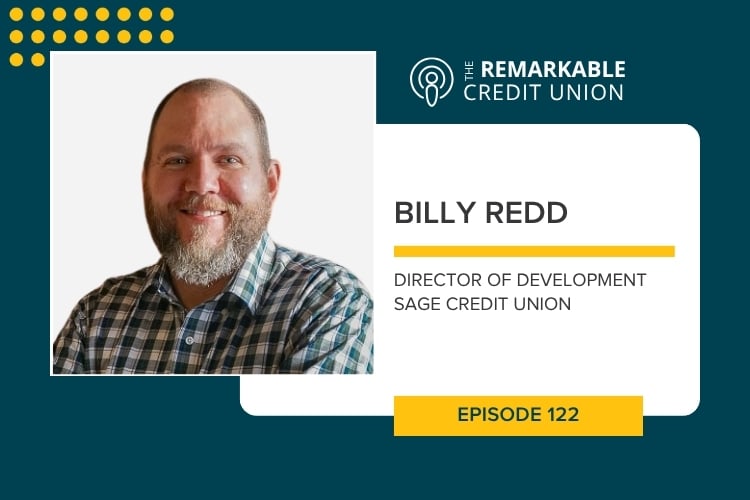
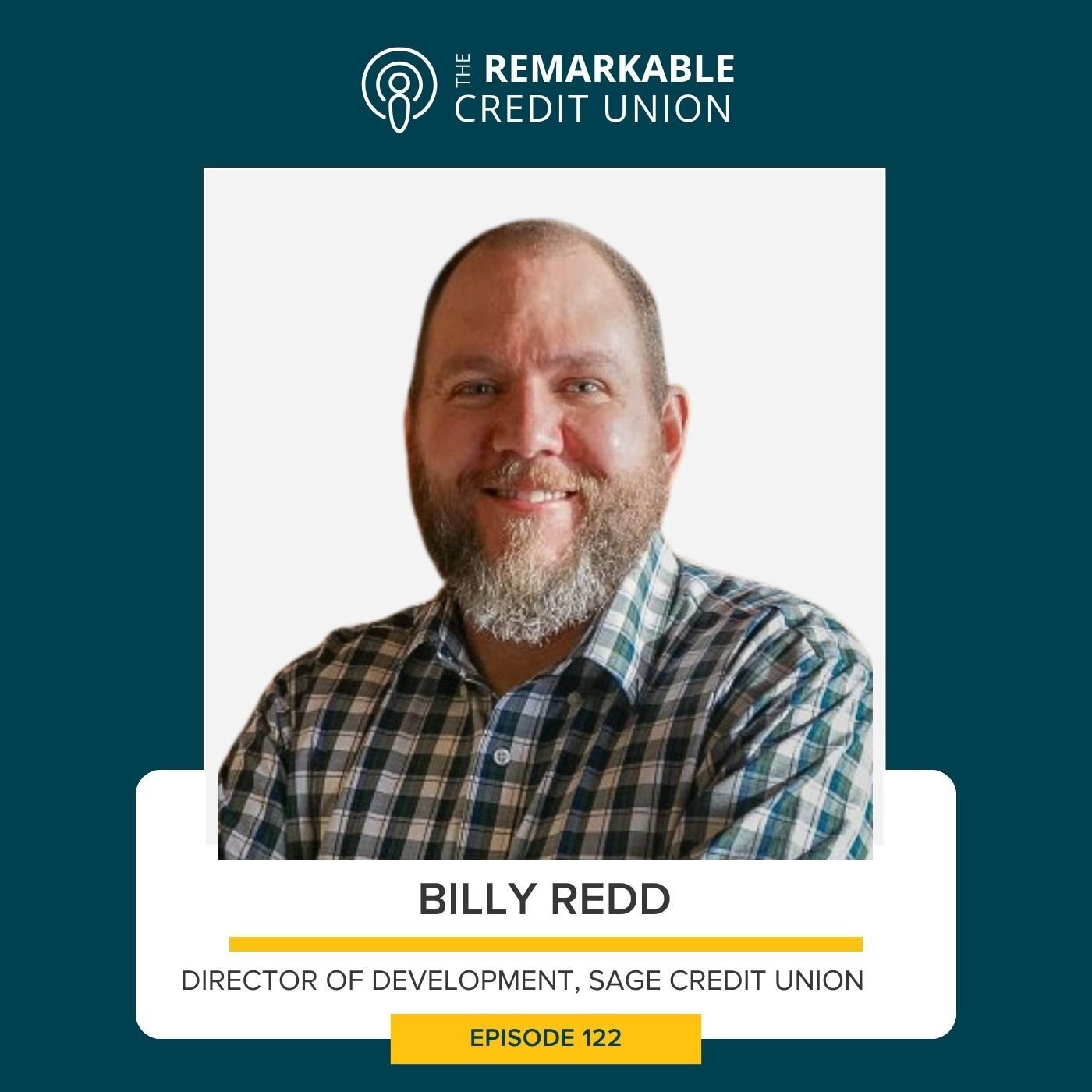
Billy Redd, Director of Development at Sage Credit Union, joins us to talk about an entirely different approach to fraud education that leverages real member stories, expert advice, a strong element of suspense, and a few playful touches. Together, we unpack this month's BIG question:
How can credit unions approach financial education—especially around fraud—in a way that truly engages members and leads to meaningful behavior change?
Key takeaways:
-
Storytelling is one of the most effective approaches for financial education and behavior change around fraud. We hear a lot of buzz around storytelling these days, and there’s a reason for that. Stories are remarkably effective, especially stories that have an element of suspense and elicit strong emotional reactions from the reader, viewer, or listener. The real member stories featured on the "True Fraud Podcast" meet these criteria, and that's what helps the lessons "stick." This is a much more effective approach than blog posts, emails, or website pages that just list out common scams. It's also more effective than gamification, which might be fun, but often still fails because humans learn through immersion and context, not through short, gamified snippets.
-
Credit unions must make fraud education a continuous, organization-wide priority that meets members where they are. Instead of relying on one-off campaigns, credit unions need to integrate fraud education into their member communications on an ongoing basis. Part of this entails figuring out where members already are — is it Instagram? TikTok? — and meeting them there. Fraud is becoming "industrialized," and addressing it requires constant attention from the entire organization. One "fraud week" per year is insufficient to stem the tide.
-
Frontline staff are critical to fraud prevention and should be engaged to develop more effective member communication strategies. Frontline staff—MSRs and ESRs—are the "heroes" who spot, detect, and stop fraud every day by asking tough, yet necessary, questions. For instance, frontline staff are trained to ask members who are withdrawing large sums of money what they plan to do with it — which could seem nosy and intrusive, but which is actually a tactic to try to prevent members from falling prey to a scam. Credit unions should celebrate frontline successes and consult with these staff members, as they have the best understanding of member needs when it comes to fraud education.
Resources & links:
- Sage Credit Union
- True Fraud Podcast
- Episode 2 of the True Fraud Podcast: Nick and His Amygdala
- Heat: Pedal to the Metal
Read the transcript:
Katie Stone:
Welcome to another episode of the Remarkable Credit Union Podcast. We created our podcast to help credit union leaders think outside of the box about marketing, technology, and community impact. The Remarkable Credit Union is brought to you by PixelSpoke, a digital marketing agency that works with credit unions to create user-friendly, high converting, award-winning websites. As a B Corp and an employee-owned cooperative, we believe that business can and should be a force for good. Each episode, we bring on expert guests from the credit union and broader cooperative movement, for conversations about the intersection of marketing and social impact. Our goal is to challenge your preconceptions about business as usual, and provide you with actionable takeaways that you can use to grow your membership, improve the financial health of your cooperative, and better serve your community. I'm Katie Stone, CEO and one of the co-owners at PixelSpoke.
Kerala Goodkin:
And I'm Kerala Goodkin, also a co-owner at PixelSpoke and the Director of Marketing and Impact. And I'm very excited to delve into our big question today, which is how can credit unions approach financial education, especially around fraud, which is definitely on the rise these days, in a way that truly engages members and leads to meaningful behavior change? So to help us tackle this big question, I'm excited to introduce Billy Redd. He's a Director of Development at Sage Credit Union, which is also a PixelSpoke client. Billy's worked there for over six years and started as their Marketing Manager. Sage is a smaller credit union, so Billy wears a lot of hats, and among other things, he recently led their rebranding efforts from Pacific Crest Credit Union to Sage Credit Union. And he's also the Creator and Host of the True Fraud Podcast, which is what inspired us to invite him on the show today.
So on this podcast, which both Katie and I have been listening to all week, Billy sits down with real victims of fraud. He listens to their stories, and then he chats with an expert to analyze what happened, to talk through the red flags and leaves listeners with really concrete tips and tricks on how to avoid getting scammed. It is a very fun podcast. We'll be talking about it a lot today, but definitely hope you take a listen.
And in his personal life, Billy has an embarrassingly large collection of board games, in his words. And his top talent is picking the right game to match the vibe of any group, which is actually a really cool talent. Billy, thanks so much for joining us today.
Billy Redd:
Yeah, thanks for having me. This is so exciting to be on the other end of a podcast. I love it.
Kerala Goodkin:
Podcast talking about a podcast. So Meta. But actually, before we get into the podcast itself, let's just start with the bigger picture. Fraud is obviously a huge issue right now, and with AI seems to have ramped up even more. So I'm just curious, what were you seeing with your members that made you feel like Sage needed to approach this differently?
Billy Redd:
Yeah, you're totally right. Fraud is such a big issue these days, and I think every credit union is looking at the same thing. Numbers just keep increasing. And every credit union, I think, is looking around going, "Is there AI that can help us combat fraud? What's the answer? Do we need to hire more people? Do we just shut down everybody's credit cards and their online access? How do we balance this ease of use of our systems for our members, and the losses that are very real for us and our members?"
From my perspective, what I kept seeing was that our frontline staff was taking a big brunt of this thing. They're my heroes and our ESRs, the people who are talking to our members every day, they have such a hard job. And what we know happens is that they stop fraud every single day.
Even in our small credit union, we know that our frontline staff is spotting, detecting, and stopping fraud every single day. And they're doing that because they're asking the tough questions, the uncomfortable ones, like when you go in and want to withdraw $5,000 and they ask, "Oh, what's that for?" And they have to do it in an innocuous way so that hopefully you don't get mad about it, as a member. Because I'm one of those people who I'd say, "None of your business, that's my money." But just by asking that simple question, they have learned enough to sense when something is off, when something's going on. And the worst thing that we're seeing, the worst trend that we're seeing is the fraudsters are coaching people to lie to our staff, to tell them that they're buying an RV or they're buying a boat or something like that.
So sometimes, of course, fraud is slipping through and our staff is literally holding people's hands while they are going through this loss that is just so sad. People losing hundreds, thousands, tens of thousands of dollars in these really convoluted and bizarre ways. Once you hear the stories afterwards, you're like, "How did this ever happen? How did they convince this person?" And yet it's happening to really smart, intelligent people who maybe have even had some training or been on their guard. So we kept seeing that over and over and we thought, "Gosh, we've got to put something out there to help our members so that they're not going through this." And then of course the credit union's bottom line is affected by this too, because sometimes we take the loss, sometimes the member takes the loss depending on the situation.
Kerala Goodkin:
Yeah. And the approach that you're taking is so unique, relatively new too. It looks like you've recorded about five episodes so far. So I was actually wondering if you could start by explaining the format of your podcast, which is really informative. You get into the member story, but then you sit down with an expert afterwards and debrief on what happened. And then I'm really curious, there are a few that definitely stood out for me when I was listening to them, but I'm just wondering if there are one or two stories that so far really stood out. And what have you learned by talking to these real life fraud victims?
Billy Redd:
Yeah, so the format is kind of fun. When we thought about putting out this podcast, we thought, "What's going to be entertaining enough that people are going to want to watch this or listen to it?" So we knew that we've got to have people's stories in their own words. We've got to do an interview. So it starts out by identifying some potential people, members of our credit union who have been affected by fraud in some way. And we reach out to them, which is a super awkward phone call to make.
Kerala Goodkin:
I was wondering how you get these people to volunteer.
Billy Redd:
Yeah. We call and we say, "Hey, this is Sage Credit Union. We know you've been a victim of fraud. Do you want to come talk about it?" And of course that first phone call is like, "Is this really the credit union?" Because half of them, that's how they ended up in this situation in the first place, was somebody pretending to be us. So once we get past that hurdle, most people have been really open about it, and okay with coming in and telling their story, because we talk about the reason behind it. We want to help other people. That's really the core of this thing, is trying to get the word out there so that more people understand the risks, and hopefully will slow down and spot those red flags.
So we get them in and we do an interview. And usually the interview really lasts about an hour. I ask a whole lot of questions, and maybe even repeat some questions, and then we take that and edit it down to a five to seven minute story, something that has a beginning, middle, and end, but gets to the core of what really happened. And then so that piece is only audio, because we want to protect the identity of our members who have been defrauded, especially because there's retargeting schemes out there. If you're on the fraud list, I guess, you're going to get targeted again. So we really want to protect their identity. So we change their names and only have that portion as audio.
So the rest of the episode is an expert that we bring in live and do, we listen to that recording together, and then talk through all of the red flags, what really happened. And so some of the experts have been our own internal fraud experts. But then others, we've brought in a psychologist from our university to talk about what happens in the brain. We brought in a judge to talk about what really happens with jury duty and what you can expect. So when we're determining which expert we bring in, we're looking at each episode individually, and trying to figure out who could really speak to this.
So one story that really sticks out to me is it's titled Nick and his Amygdala. Nick isn't his real name, of course. But he was contacted over the phone by somebody saying, "Hey, you took out a PPP loan during COVID and you never paid it back. So there's a warrant out for your arrest now." And of course, he's a regular guy. He didn't take out a PPP loan. There's no warrant out for his arrest, but that's what the phone call said. And the phone call, I believe the caller ID said Klamath County Sheriff, or at least something in Klamath County. And somehow the scammer convinced him to go home, get cash, and deposit it into a Bitcoin machine, which I think he called a federal lockbox, something like that, in order to avoid being arrested.
And so the whole thing, this episode is interesting because it really revolves around fear, and the scammers knew exactly how to push Nick's buttons. And they kept raising the stakes, "If you come into the sheriff's office, you will be arrested. Don't drive too fast because if you get pulled over, you're going to be arrested, because there's a warrant out for your arrest." And so he was willing to do anything. And Nick is very articulate, and he was able to explain in very clear terms what was going on in his brain throughout the whole ordeal. And that's the one that we bring in a psychologist from the university to talk about his amygdala, and was hijacking his prefrontal cortex and not able to make clear decisions because of all of the fear that was being injected by the scammers that were on the phone.
Kerala Goodkin:
That episode really stood out to me. And I think one thing I noticed is just, first of all, how articulately all these people tell their stories, and how honestly they tell them. And with Nick in particular, he talks about after he deposited the money, on his way home, he's just now seeing all the red flags and just how in the moment... And the other thing that stood out for me was the scammer was positioning himself as such a friendly, helpful guy who's on Nick's side, and is going to help get this resolved for him.
So I know after the fact it's easy for a lot of people to think, "Oh, I would never put myself in that situation." But you're seeing the stress and these tactics they use that are remarkably effective. And I just wanted to add too, that a really fun component of the podcast is that in the video version, people actually have a red flag, and they're raising it while they're listening to the story, anything that should arouse suspicion. And you can hear a sound effect on the podcast versions. That's a really fun touch.
Billy Redd:
So that's a quail sound effect, which is our logo now is a quail.
Kerala Goodkin:
I was wondering. I love it.
Katie Stone:
I have to confess, the first episode I was listening to when the quail noise first went off, I didn't realize it was coming from my computer speakers. And I was looking around going, "What? Where?" Well, we know that really financial education in general can be a really tough thing to measure. So I'm curious to know, how do you think about success when it comes to financial education? What are the signals that are telling you that the podcast is working, it's reaching people, it's influencing them?
Billy Redd:
Yeah, so that's a great question because we don't want to put things out there. We don't want to spend a lot of time on things that aren't actually working. We're still early days in this podcast. So we're of course looking at the numbers that everybody looks at when they put out content online, but that doesn't necessarily mean success. That means people are watching our podcast, or listening to our podcast. It doesn't mean that they're actually avoiding fraud at any higher rate than they were before.
So as a credit union, we do monitor our losses and our member losses, things like that. And like I said, it's still early days, so we have not seen any clear indication in those numbers yet. And so right now our success is very dependent on anecdotes, people saying, "Oh, I've been listening to your podcast." But we do get comments from people saying, "I got a phone call from the Klamath County Sheriff, but I've heard your podcast, so I hung up right away. I knew it wasn't real."
Those are the things that we're depending on right now to indicate success is just anecdotal, but we hope to see some clear indicators in our actual loss numbers eventually.
Katie Stone:
Yeah, but I think that's a really great reminder that success isn't always measured by metrics. Billy and I were both at the America's Credit Union's Conference a few weeks back, and one of the sessions I went to was about how to win Diamond Awards. And one of the things that they talked about was that you don't always have to show the success of your campaign through numbers. One of the more powerful ways to show the success is through anecdotes, quotes and testimonials from your members. So I think it's a really important thing to remember that numbers definitely tell a story, but our members' responses do too.
Billy Redd:
Yeah. Yeah. I'm still waiting for the story of somebody saying, "I took a call and I took the money out, but then I remembered something from the podcast and it stopped me." So hoping to get that story eventually.
Katie Stone:
Absolutely. Well, there's a lot of ways that credit unions can educate members, emails, blog posts, website alerts, PixelSpoke, we have a lot of digital tools to educate members. But I'd love to hear more about the podcast and really what sparked that idea to try something a little bit more unconventional when it comes to educating members about fraud.
Billy Redd:
Yeah. And maybe I'm a little cynical about this, but I feel like there's a whole industry out there that's ready and willing to take our credit union's money to recycle content, blog posts and things like that. And of course, as the Director of Marketing here, I've been under pressure from our leadership to put something out there. We as a credit union take responsibility over this, and we know we have a responsibility to educate our members. On the flip side of that, I've never seen any evidence that blog posts actually halt fraud, or stop it, or even slow it down at all. My argument is that people taking the time to read a blog post about fraud are the least likely people to be affected by fraud in the first place.
Kerala Goodkin:
Yeah, that's a good point.
Billy Redd:
They're the people who are already on their guard. So from there, it didn't take long to think about all the channels that are available to us to find a medium that would touch a whole different audience. It would be accessible to everyone, something that people enjoy consuming. And so podcasts just went right to the top of the list as it's the thing right now, and it's so cheap and easy to get a podcast going. So we are hoping that this actually makes a difference beyond blog posts and things like that, that people have to search for.
Katie Stone:
Yeah. It makes a lot of sense to just really meet people where they're already at. And then the other thing I just think is so powerful is the storytelling piece, which I know we'll dig into a little bit more. But we have a saying here at PixelSpoke. I might've even shared it on a previous podcast episode, but we say that smart people learn from their mistakes, but wise people learn from other people's mistakes. And I just think your podcast presents a tremendous opportunity for us all to learn from other people's mistakes.
Kerala Goodkin:
Yeah. And we've already talked a bit about why so much educational content is falling flat or doesn't really stick. And I share your feelings around a lot of blog content out there. In fact, somewhat ironically, I think our most read and highest performing blog post of all time is called, Is Anyone Reading Your Credit Union Blog? So it's clearly people are saying that a lot of blogs just are not getting a lot of traffic. Not much is sticking. So can you talk a little bit more about why you think more traditional approaches to financial education often fall flat?
Billy Redd:
Yeah, so blogs may work. They really might be working and we just don't know about it. So I don't want to trash anybody who's got a blog going about fraud. It may really be making a difference. But I feel like the audience is narrow for people. I don't read any blogs. Maybe 20 years ago when blogs were at their height, maybe I read a couple. But I feel like that audience is getting more and more narrow and you're only hitting people who learn by reading, which is also a shrinking demographic of people. So I just have my doubts about that as the best way to deliver education.
And then the other trend that is getting really big is gamification. There's a lot of companies getting in on that game, and I'm not a fan, I'll be honest. I don't think gamified learning actually sticks. I think about Duolingo as the classic example of a gamified learning that maybe doesn't quite work the way you think it works. It's a great app. They're so quirky. I love the fact that they change their icon all the time, and they just do strange things to get some attention. So their marketing's fantastic, by the way. But the actual learning, it's quick, simple lessons. It gamifies the learning of another language and it makes you feel good. It makes you feel like you learned something. But the problem is that it doesn't actually teach you the language.
Anybody will tell you that if they have relied on Duolingo and they go to another country and try to speak the language, they're lost immediately. They can't actually speak the language. They can parrot some words and phrases, but the learning language takes immersion, and it takes context, and we're humans. We don't learn in short little snippets that are gamified. We're not robots and we're not AI. We can't just instantly download a large language learning model. That's just not how we do things. And so that's why story I think plays a big part in this and gamification maybe is a, I think it's a passing fad eventually. I don't know. Maybe I'll eat my words in a few years. Somebody will figure out the secret formula to make you actually learn through gamification.
Kerala Goodkin:
I share your skepticism and I appreciate it. I've actually not tried Duolingo myself, but I know everyone was talking about it for a while. I feel like I've heard less about it. But yeah, my question was, is anyone actually learning the language or is this just fun? And if it's fun, that's fine, but let's just be clear about the outcome.
Billy Redd:
Yes.
Katie Stone:
Yeah. So Billy, I'd love for you to expand a little bit more on what you closed that answer with and around storytelling specifically. Can you talk a little bit more about what role you think storytelling plays in financial education? And why is it more effective than just presenting information?
Billy Redd:
Yeah. For us, the story is the lesson. You mentioned it earlier about people being able to learn from other people's mistakes. And this is how humans have communicated moral lessons for time immemorial. Story has been used to reinforce learning. Being able to parrot the definition of a scam, or being able to list the most common tactics of fraud today, it doesn't really help people. And so again, I think that's what you would get by reading an article, but people remember the emotion of Nick and his amygdala. We were talking about that earlier. We remember the emotion that he felt when they said, "There's a warrant out for your arrest, and you didn't repay your PPP loan." People remember how the scammers told George in our very first episode to lie to our staff, who he said he had known our staff for 25 years, and they told him over the phone to lie to our staff so that he could withdraw his $40,000 that he eventually lost.
Feeling that is way more effective than knowing that scammers might tell you to lie to an MSR over the phone. But hearing George's story about how he actually did it, and that he felt bad doing it is way more effective. When you've got a story to connect it to the lessons explain themselves. You don't need a quiz, you don't need a classroom setting. Just hearing that story, and the human emotion, and part of our human condition behind it actually helps make it stick.
Katie Stone:
Yeah, I was going to say, I think it also helps to know that this happens to real people in our communities, and intelligent people. There's always this idea that, "I'd never fall for that. That wouldn't happen to me." But when I was listening to George's story and Nick's story, I was like, "Oh yeah, I could see myself in that position in that moment, and just trusting the voice of authority on the other end."
Billy Redd:
Yeah, these are absolutely smart people. We really try to talk about this a lot, that it can happen to anyone. Yeah. Like you said, you think, "Oh, maybe I'm smart enough. I wouldn't fall for that." But yeah, these are very smart, capable people, and the people who are perpetrating this do it for a living. This is their job, and they have manuals just like any other call center. They have a manual for how to handle every situation.
Katie Stone:
Maybe that's the most terrifying. I just imagine what these people could accomplish if they use their brains for good. These are very smart, sophisticated scams that really leverage human psychology. And if we could put those into more positive areas, that would be really powerful.
Kerala Goodkin:
It's a very good point. Yeah. And we've talked a lot about the more traditional, which I keep putting in air quotes, but traditional financial education approaches. And just want to make it clear that we're huge fans of financial education. We truly appreciate that credit unions are taking this on and taking it seriously because it's really important, and we're just invested in trying to see how it can be even better. And I've noticed that being a member of a credit union and also seeing a lot of marketing materials from credit unions, it seems like there's a lot of one-off campaigns going on around different financial education topics. Maybe it's saving up an emergency fund, or saving for retirement. Or it may be some one-off workshops or webinars you can attend.
I'm just curious, how do you think credit unions can make their educational efforts just not only more continuous, but really more embedded into the member experience? Not as this separate thing away from the products and services that are your credit union's bread and butter? And especially in your case, Billy, Sage is a smaller credit union and you're not working with the same resources as some of the bigger financial institutions. So what advice would you give credit unions for just implementing some more effective financial education strategies?
Billy Redd:
Yeah, I think the struggle is the same for every organization on the planet. What do we focus on today? What's most important? And for credit unions, they're probably right now saying, "We need to focus on deposits. We need to bring more deposits in," or maybe they're focused on loans. And fraud seems to be creeping up on that level of priority because it's becoming industrialized. That's the way my CEO puts it, the industrialization of fraud. And I think that I love that term because it makes a whole lot of sense, that it's a whole industry.
So I think it is creeping up on the priority level. But as far as advice on how to get it there permanently, I think it starts by talking with staff, especially the frontline staff, but really the staff and the entire organization talking about it a lot. A lot of credit unions have a department, maybe one or a couple of people that deal with the fraud. And I would guess even more than other departments, has a tendency to be siloed and away from everything else, because they're dealing with all this sensitive information. And again, we don't want to intrude on people's privacy. We don't want to broadcast that we have this problem with fraud either. So we don't want that to be the thing people talk about, because it can erode trust in your organization.
So the frontline staff is probably the only ones that are hearing the story from people, but then they maybe don't even know how it ends up. It gets taken care of in another department. So our frontline staff need to be celebrated when they catch and prevent fraud. That's an easy place to start, because I guarantee it's happening and not even just in the credit union. I guarantee that Wells Fargo, their employees are catching fraud too. So just celebrating that is a good thing. That's a win every time it happens. And then probably starting with your frontline staff, asking them lots of questions. If you're wanting to get going on maybe some better or a new approach to fraud education, start by talking to your frontline staff, because they're the ones talking to our members every day, and probably know the needs better than anybody in the C-suite or in a back office.
One thing that's come up recently from our staff is that sometimes it's hard to convince members that they're being scammed, especially like romance scams. Those are the ones that people really feel shame over that kind of thing, or just really don't want to believe it's true. And so in talking with frontline staff, we've started down this idea to laminate some pieces of paper, some sheets that'll look official, because if it's laminated, it's more official. Have this laminated paper that just says something like, "Is this fraud?" And then come up with common phrases and techniques that scammers are using. And then on the other side, maybe a short story or two about Johnny or Susie, and how they were defrauded. Because the patterns are very, very similar.
We've only recorded five episodes and it's like the same story gets repeated every time, in a different way, different venue, different person, but the tactics that they use are strikingly similar. And so I think that the psychology of just pulling out this official laminated sheet and saying like, "Look, this is what you just told me, and it's right here on this sheet saying this is probably fraud." I think that that could help our people. We haven't got there yet. We haven't implemented this yet. So I think that there's a lot of really low cost solutions out there that just deal with the human psychology part of fraud, that could help our credit unions overcome those barriers and stop more fraud.
Kerala Goodkin:
I love that. And I really love the emphasis on talking to frontline staff. We tell our clients that for things like developing FAQ repositories, it's like, "Let's not just guess what questions people are asking. Let's actually talk to the people who are talking to the members." So really appreciate that.
Billy Redd:
Yeah, somebody knows.
Kerala Goodkin:
Yeah.
Katie Stone:
All right, great. Well, let's jump into some rapid fire questions next. These are just for fun. So Billy, what's the best trip you've ever taken?
Billy Redd:
The best trip is to Rome. That was my favorite. We went, I think it was two years ago. Hands down, the best food in the world is in Italy for sure. Everything really famous in Rome is within walking distance. We got an Airbnb right in the middle of all the things and yeah, it took us a week, and we saw everything we wanted to see in Rome. Fantastic, relaxing place to take a vacation.
Katie Stone:
Awesome. Great. And then if you could instantly become an expert in something, what would that be?
Billy Redd:
Yeah, it would be something creative like, I don't know, playing guitar or painting. I really like to create, but gosh, I don't have the patience to be bad at it for a long time. I want to instantly be good at these things. So I know it's going to take 10,000 hours to be a good painter and I don't want to do that. I really want to create, but I don't want to put the time in to be great at it.
Katie Stone:
Yep, that resonates a lot. And what's your favorite go to comfort food?
Billy Redd:
Yeah, so that for me is white rice, just plain white rice. We lived in Cambodia for a couple of years, my wife and my kids. And in Cambodia, you eat white rice with With literally every meal, every single meal. And so when I have white rice, just takes me back.
Katie Stone:
Cool. All right. I have one bonus rapid fire question. I'm going to throw this one at you. It's a surprise, but since one of your talents is picking out the best board game, what would you suggest for this group of people here today? Me, Kerala and you were playing a board game. What would you grab?
Billy Redd:
Oh yeah. So we've got a good mix because you're both really smart people. I feel like Kerala wants to... She probably likes the games with a lot of rules, that you could really get lost in the rule book for a long time. And I think Katie wants to have more of a good time. She wants to just get right into the game and start playing it. So I think the perfect game is called Heat. I think the subtitle is Pedal to the Metal or something like that. It's a racing car game. It's designed around Formula One in the '50s or something. It's got a lot of familiar components. So you can just start picking it up and playing, but the strategy is pretty in-depth, but a 12-year-old could start playing it right away and start getting into it. So I'd go with Heat.
Katie Stone:
That is impressive. You truly do have a talent for this. Nice work.
Kerala Goodkin:
I've been playing a lot of Othello with my kids lately, and I think the tagline for that game is, "A minute to learn, a lifetime to master."
Billy Redd:
Yeah. Yeah, that's a good one.
Kerala Goodkin:
Well, I love that talent. It's not something I thought of, but I do play a lot of games in my family. So I'm going to try to develop it. Hopefully it's not as hard as painting, but we'll see. All right, let's do our final take. So just as a reminder, our big question today was, how can credit unions approach financial education, and especially around fraud, in a way that truly engages members and leads to meaningful behavior change? So the ultimate challenge here, Billy, in just a few sentences, can you summarize your thoughts on this?
Billy Redd:
Yeah, absolutely. I think first, figure out where your members are spending their time already. Your marketing department is probably already pretty up on this, and start communicating there. If they're on Facebook, go to Facebook. If they're on Instagram, go to Instagram. And then find a way to share fraud education as a story that becomes a parable of sorts, that gives a lesson that's embedded in the story from the member in their own words. Then the last part we just talked about, is talk with your staff about it a lot. Just bringing it up now and then, once a year, having a fraud week probably is not enough to stem the tide that is coming our way.
Kerala Goodkin:
Great pointers and very succinct. Thank you. Well, thanks so much for joining us, Billy. I've learned a lot from your podcast and from this conversation, so really, really appreciate your time.
Billy Redd:
Yeah. Thank you so much for having me.
Katie Stone:
Thanks, Billy.
Kerala Goodkin:
Oh, what a fun and fascinating conversation. So thinking about distilling it all down into three key takeaways. Number one, I'd say storytelling just seems to be one of the most effective approaches for financial education and behavior change around fraud. I know we hear a lot of buzz around storytelling these days, but there's a reason for that, and stories are remarkably effective. And especially real stories that have an element of suspense, and elicit strong emotional reactions from the reader, or viewer or listener. And the real member stories featured on the True Fraud podcast definitely meet these criteria and really help the lessons stick. This is such a more effective approach than say, just listing out common scams on a website page buried in the navigation. And also more effective than gamification, which might be fun, but it often still fails because of what Billy referred to as the Duolingo problem. Humans really learn through immersion and context, not through short, gamified snippets.
And number two, credit unions really must make fraud education a continuous organization-wide priority that meets members where they are. You can't just rely on one-off campaigns. Credit unions need to integrate fraud education into their member communications on an ongoing basis. And part of this entails figuring out where members already are. Is it Instagram, TikTok, Spotify? And meeting them there. Fraud is becoming industrialized and addressing it requires constant attention from the entire organization. One fraud week per year just isn't going to cut it.
And lastly, frontline staff are critical to fraud prevention, and they should be engaged to develop more effective communication strategies. They are really the heroes who spot, detect, and stop fraud every day by asking the tough yet necessary questions. I keep thinking about frontline staff asking members who are withdrawing large sums of money, what they plan to do with it. It's a hard question to ask. It seems kind of nosy and intrusive, but it's actually a tactic to try to prevent members from falling prey to a scam. So credit unions should really celebrate frontline staff successes and consult with them, as they have the best understanding of member needs when it comes to fraud education.
All right. Well, thanks for joining us today for another great episode. The Remarkable Credit Union is brought to you by PixelSpoke, a digital marketing agency that works with credit unions to create user-friendly, high-converting, award-winning websites. As a B Corp, an employee-owned cooperative, we believe that business can and should be a force for good. You can learn more and check out our work at pixelspoke.coop. That's PixelSpoke, all one word,.coop. Until the next time, I wish you the best of luck in making your credit union remarkable.