AEO, GEO, zero-click searches. Amidst all the buzz about the changing search landscape, how do we move forward in a way that is neither too reckless nor too cautious?
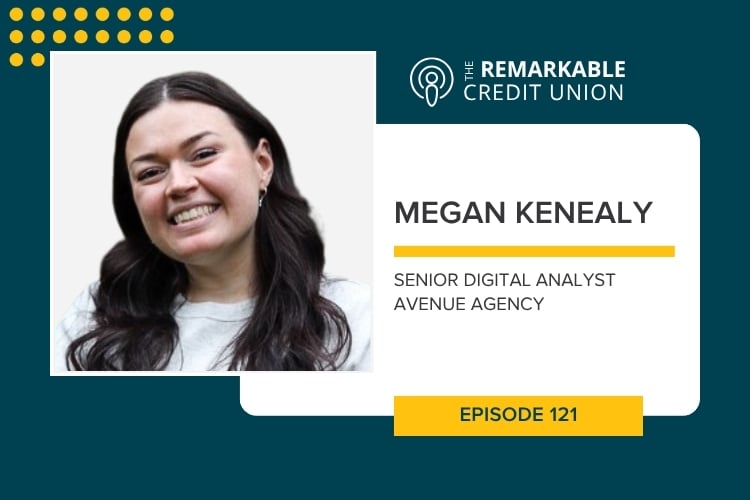
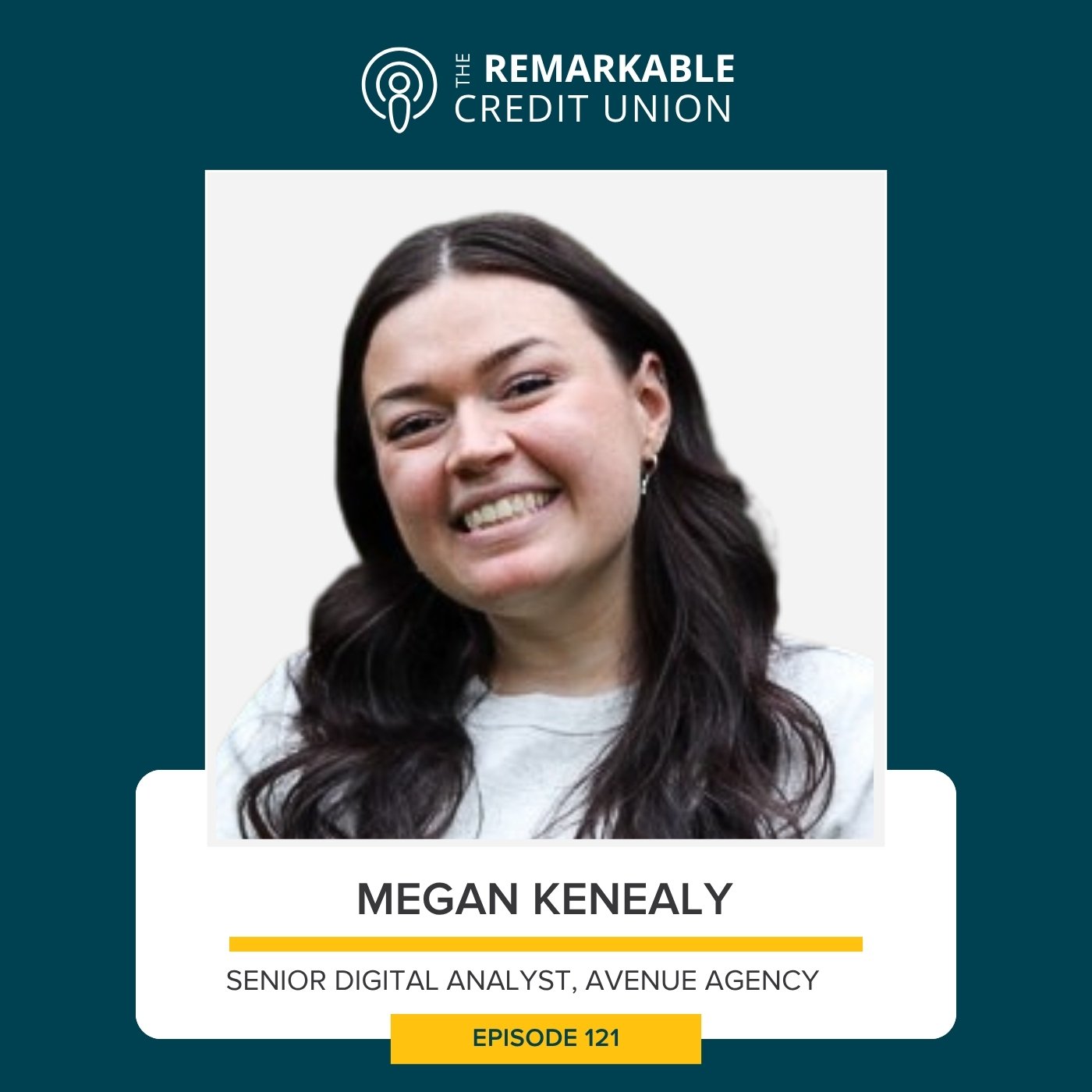
In this episode of The Remarkable Credit Union podcast, we sit down with Megan Kenealy, Senior Digital Specialist at Avenue Agency, who works with credit unions and purpose-driven companies on SEO and AI Search, amongst other digital marketing strategies.
Megan helps us break down which new search considerations credit union marketers should pay careful attention to, as well as which traditional SEO and user experience practices remain critical in the face of growing digital disruption. Join us to unpack this month's BIG question:
How is AI currently impacting the marketing industry, and what are the specific implications for credit union marketers?
Key takeaways:
-
Focus on content structure to become the "answer engine": The goal of search is shifting from being a discovery engine to an answer engine, particularly with Google’s AI Overview. For credit union marketers, that means structuring content so you can offer the first and best answer to a question. In practice, one of the most effective strategies for this is adding FAQs to pages where possible and ensuring that the structured data on the backend is optimized for AI and search engine crawlers.
-
Preserve the human element and core SEO fundamentals: Credit unions, as human-focused organizations, should be cautious not to make content "by AI, for AI." Also, the key SEO fundamentals (like keyword intent, technical aspects, and backlinks) are still critical for AEO, as a page ranking number one on Google is cited significantly more often. When it comes to AEO, the most successful credit unions create well-structured content that also considers the human aspect, ensuring content remains trustworthy and accurate.
-
Adapt success measurement for zero-click visibility: Due to the rise of zero-click searches, traditional metrics like organic traffic to the site may steadily decrease. Credit union marketers should recognize that a drop in organic traffic doesn't mean their content isn't being seen.
Glossary of terms:
- AEO (Answer Engine Optimization): The preferred term by Avenue Agency for optimizing content for AI visibility.
- GEO (Generative Engine Optimization): An alternate term for optimizing content for AI.
- LLMs (Large Language Models): General term for the generative engines.
- ChatGPT: An AI tool that Avenue Agency has the most knowledge and experience using for day-to-day tasks.
- Gemini: An AI tool mentioned by name.
- Claude: An AI tool that is more helpful for writing content.
- DeepSeek: An AI option considered for its potential to be more environmentally friendly.
- Perplexity: An AI tool considered helpful for Google-based organizations.
- SEMrush: An SEO tool that has started to incorporate AI features.
- Moz: An SEO tool that has started to incorporate AI features.
Read the transcript:
Katie:
Welcome to another episode of The Remarkable Credit Union Podcast. We created our podcast to help credit union leaders think outside of the box about marketing, technology, and community impact. The Remarkable Credit Union is brought to you by PixelSpoke, a digital marketing agency that works with credit unions to create user-friendly, high converting, award-winning websites. As a B Corp and an employee-owned cooperative, we believe that business can and should be a force for good.
Each episode, we bring on expert guests from the credit union and broader cooperative movement for conversations about the intersection of marketing and social impact. Our goal is to challenge your preconceptions about business as usual and provide you with actionable takeaways that you can use to grow your membership, improve the financial health of your cooperative, and better serve your community. I'm Katie Stone, CEO and one of the co-owners here at PixelSpoke.
Kerala:
And I'm Kerala Goodkin, also a co-owner and the director of marketing and impact at PixelSpoke. And today we're going to address a big question that we've been hearing a lot of chatter about lately. That is, how is AI currently impacting the broader marketing industry? And what are the specific implications for credit union marketers? So to help us answer this question, I'm really excited to introduce Megan Kenealy.
She's a senior digital specialist at Avenue Agency with over five years of experience across SEO, Google Ads, paid and organic social. And she specializes in helping purpose-driven brands grow their digital presence in ways that feel intentional and authentic. And for full disclosure, PixelSpoke often sends clients to Avenue Agency, especially for SEO because that's not within our wheelhouse.
So we have some clients in common and we've enjoyed working together over the years. And when Megan is not digging into keyword trends or campaign data, she's exploring national parks, paddleboarding, photographing her friends, or hanging out with her cat watching whatever reality show is currently blowing up the group chat. So actually my first question for you, Megan, welcome, and what reality show is currently blowing up your group chat?
Megan:
Oh, what good timing for that question? It's going to be Secret Lives of Mormon Wives and the recently canceled Bachelorette season. That's hot off the presses.
Kerala:
Okay, good to know. I am not in the reality news loop, so always good to be kept informed.
Megan:
Yeah. You can always come to me for those questions.
Kerala:
Maybe we'll do a separate podcast on The Secret Lives of Mormon Wives, which sounds fascinating.
Katie:
I was going to say, it sounds like Megan and I should do our own separate podcast on reality TV because I could speak for a long time about that.
Megan:
Oh yeah.
Kerala:
But maybe something a little more relevant for credit union marketers, we've all been hearing a lot of buzz about, for one, I'm never quite sure what to call it, but there's generative engine optimization, GEO. It also seems to be referred to as answer engine optimization, AEO. And they're both about optimizing content for AI. So for those of us who are maybe behind the AI curve a bit or having trouble keeping up, can you just give us a basic rundown of exactly what GEO/AEO is?
Megan:
Yeah, so great question. I know at Avenue we've just been saying AEO, AIO, GEO and using all of them, but I actually think that we're going to start leaning more into the term AEO. And the reason for that is because I guess the phrase you could say is the name shapes the behavior. So in the early days of SEO, there was a lot of shady tactics of just stuffing keywords and doing whatever you can in order to get cited by Google without actually thinking about the user experience.
And then there had to be this reckoning of moving into more white hat SEO tactics is what they call them. So I think when we're focused about thinking about AI and optimizing for the LLMs and the generative engines, we also have to be considering the user so that we don't fall into that same hole of disregarding the users completely and catering our website content to be strictly focused on AI visibility.
But when we think about that and what it actually is is optimizing our website for getting that AI visibility. We still want to get the AI visibility. We just also want to think about the people on our website. So I think we can go a little bit into how it's different from SEO, but I will spoil it and say that a little bit of how we've been referring to it is a Venn diagram where the circles are very close together and overlapping a lot.
Kerala:
Gotcha. Okay. Well, that leads directly into my next question because you specialize in SEO at Avenue since your inception. And I imagine GEO... Sorry, you were saying AEO. We'll decide on that acronym. It's a growing consideration for you when working on optimizing client websites and just general content strategies. So you mentioned the Venn diagram. Let's delve into that a little more. Where would you say AEO overlaps with SEO and are there areas where it diverges where you're really tackling two separate objectives?
Megan:
Yeah, so I would say they overlap really closely. I think there are a few elements that may be more important to an LLM than a traditional search engine, but I think 99% of what matters to traditional SEO is also important for AEO or optimizing for AI. So we know that keyword intent still matters. Many of the technical aspects that both of us focus on, both at Avenue and at PixelSpoke, all of that matters and authority, things like backlinks, all of that still matters as well.
But I think where it diverges is when you're optimizing for SEO, the goal is not only to be the first result on Google and then bring that traffic to your website, but now we have the presence of the Google AI Overview. And so oftentimes the goal is shifting to be the first person and the best website to answer the question that people are searching for. And so that kind of changes things.
But I will say a study that we recently came across this week found that pages ranking number one on Google for a certain query were cited three and a half more times than any pages outside of the top 20 on the search engine results page. So I think that, if nothing else, really cements that many of the foundational traditional SEO tactics that we know and that we have been consistently working on since SEO's inception are still very important, if not more important than maybe they once were, because now there's this new layer of visibility being added in.
Kerala:
Gotcha. That's helpful.
Katie:
So you mentioned that you just read this this week, which I think is an excellent segue because things are changing fast and there's a lot of unknown still it sounds like about AEO. We've heard it said that the rules are still being written. So I'm curious to know what are the unanswered questions you and your team have about AEO at this point? What are we still trying to figure out?
Megan:
Yeah, I think a lot of it. I think we're still trying to figure out a lot of it. I think very similar to the omniscient Google algorithm, we also don't know everything about what AI is actually using to weight, how it's choosing sources, what it's citing. I think another thing is consistency. I came across another study that found that you can ask the same AI model the same question a hundred times and say you're asking for, oh, what are the top 100 car dealerships, it's going to answer in a different order 99% of the time.
So it's just a matter of, well, why is that happening? What's changing between the times that these questions are happening that is changing the results so drastically? And so I think as we've started to figure out over time what is important to Google and when they do the great algorithm updates, they eventually share little overviews of what's happening and we're starting to be able to glean some insights.
So the hope is that over time with AI as it continues to grow and just really explode, that we'll start to get some of those insights as well. But I think we can make educated guesses on what's being prioritized and what matters, but there's a lot that we don't for sure know.
Katie:
I'm curious to know how much my personal interaction with these AI tools influences the results. So for instance, if I asked for the top 10 auto dealerships versus you asking for the top 10 auto dealerships, what are the chances we get the same result or is that at all influenced by our previous queries or information it has gleamed about us?
Megan:
Yeah, great question. So it's definitely influenced by what it knows about you basically. And I think that is starting to be something that can be said not just for a conversation with a ChatGPT or a Gemini, but also for just a regular Google Search.
Something we've been chatting a lot about with clients over the past I would say even just week, again, this is moving so fast, is that how many things are being run, whether it's Google Ads or just a traditional search, and the answer that's being fed to you is based a lot on your past behavior and what the browser knows about you. So again, we find that if I'm searching for a question on Google, the answer that I get in the AI overview is probably going to be different than what you're getting.
Katie:
So have you guys figured out any tactics to build more consistency or to override that internal knowledge? Are there any tips or tricks around how to do that?
Megan:
Yeah. I mean, I would say one thing that we tested, this was probably over a year ago at this point, was if there's a certain question or an answer or a list or whatever it is that you know like, okay, we want our organization to be cited here, I want this blog to be cited here, search up that question, see what the result is now. And then the way that I said it to someone recently was like, "Oh yeah, you can copy my homework, but just change it a little bit."
That's kind of exactly what it is because we know that Google likes what is being cited there for some reason. So if you can emulate the content that you want to rank to be in that same style, whether it's the same structure or some of the same wording, that has been something that has been tested and been successful.
Katie:
Fascinating. Makes a ton of sense too. So changing gears a little bit, something that's caught our attention as a website design agency is this concept of zero-click searches. So basically the idea that people are getting the information that they need upfront without ever clicking through to the website. So also wondering, does this change the rules of the game when it comes to structuring content on credit union websites? How should credit union marketers be thinking or rethinking about their website strategy?
Megan:
Yeah, so I think the biggest thing that we've been talking about with many of our credit union clients is more of how the content is actually structured. So it's not even necessarily the wording or the content itself. Of course, that matters too, but a lot of it is the structure.
So adding in FAQs to pages where it's possible and making sure that the structured data behind the scenes of the website matches up with that so that not only is that FAQ optimized for the user experience, but also for a search engine crawler or the ChatGPT crawlers and whatever's going to be combing through your website to find that information. The other part of that too is keeping in mind that we might start... And I think this is something that I know we've already started to see.
We'll probably see certain metrics just steadily decrease. So we might be getting more traffic to our site from organic, but that doesn't necessarily mean that less people are seeing the content that you have on the website or having their questions answered by your website, whether it's happening in that zero-click search on the Google Search Engine results page, or maybe that question is being answered by AI that is crawling your website and using the resources that you've put out there to answer that question.
Katie:
That's such an important point when considering analytics data and thinking about how behaviors will change. Great. Thank you.
Kerala:
I think this relates. You recently did a structured data audit and review for one of the credit union clients we have in common. So I'm just wondering if you can explain what this is and what the goals were for this project and if there are any insights that got revealed that might be instructive for other credit unions.
Megan:
Yeah. So I think what I would say about that is that's a big piece. I mean, what I will say too is big shout out to PixelSpoke because you guys have a lot of the technical expertise and knowledge that is really helpful in making recommendations like that feasible to implement and making them successful. So getting feedback from your team was really helpful. But I think the goals of something like that, it is a lot of that backend stuff.
So again, we're thinking about the user experience, but then we're also thinking... Like we're recognizing what's on this page, but what can we put in the backend and in the coding of the page that will better communicate the valuable information that we have on this page.
Because we know all of our shared credit unions have lots of valuable information on their websites, but we just want to make sure that any search engine, whether that is a traditional search engine or AI or an LLM crawling that has the most information possible so that we are increasing our likelihood of being the website that is cited in a result and that we're the answer that Google or ChatGPT or whoever else, whoever else, whatever else knows is authoritative and is a source of truth.
Kerala:
As a follow-up, what advice would you give to a credit union? I mean, I guess where I'm struggling is when we talk about structuring content in the backend, it can seem very mysterious. SEO has always seemed a little mysterious to me, even though I get the basics, but I'm just like, is this really helping and am I really doing this right? So is there a specific consideration or set of considerations when you're talking about backend structure for credit union websites?
Megan:
Yeah. I mean, I think the first thing I would say is that confusion and frustration, especially with something like SEO, that the results aren't going to be immediate. So sometimes you do something and you're like, "Okay, well, what has this done?" Because it might be six or eight months before you see a result.
I know another piece of just optimizing for AI visibility is the way that we're measuring success is just haphazardly putting little manual processes together and testing out like, "Oh, well, what was the answer to this question last month from ChatGPT? What is it this month?" So just considering that right now these efforts might be a little difficult to measure, but knowing that if whatever you're doing, literally anything to optimize your website for AI is probably putting you ahead of a lot of other websites and competitors that haven't done anything so far.
I mean, I'll tell you, obviously at Avenue, we've been talking about AI and how it intersects with SEO for a long time, and we've had a couple of prospects come to us and say, "Oh yeah, ChatGPT told us about you." So there is value in doing this behind the scenes stuff that does seem like, "Oh, well, what is this really doing?" It is doing something.
Kerala:
That's good to know.
Katie:
I'm just curious, you mentioned a couple, Gemini, ChatGPT. What different AI platforms are you all testing on? Is it a long list, you rely on one or two, or I'm just curious to know more about that.
Megan:
Yeah. I mean, there are so many, and I think ChatGPT was the first to the stage, and that was the one that we really started testing out and experimenting with probably two years ago at this point. So I think that's where we've maybe built up the most knowledge and just experience and how to really use that tool for making just day-to-day stuff like note-taking or, I don't know, to do lists, making that stuff easier.
But I know something like Claude, that's a lot more helpful when it comes to writing content. So I know for certain functions, that's a tool that's been used. Another one that we looked into and started to test out was DeepSeek just because we're a B Corp, as is PixelSpoke. And so the environmental impacts of AI are a real thing that we do consider and something that we've been conscious of for a while, and that's why we have our AI manifesto on our website.
But when DeepSeek came to the scene, there was word that it was a more environmentally friendly option. I think at that time we did find that it didn't serve our needs as well as maybe something like ChatGPT. And then I know too, there's Perplexity, and I think that's helpful for if you're a really Google-based organization. I mean, I think it ties in perfectly with Google as well, I mean, especially as being an agency that is working on SEO and spends pretty much all day, every day talking about Google.
I think we just have built up so much history and understanding of ChatGPT that it is still our favorite tool at Avenue. But I mean, even beyond the LLMs, there are other features within reporting tools and SEO tools that we use that have, of course, started to incorporate AI. So just tools like Semrush and Moz and even our agency reporting tool, there's certain AI features in there that are unavoidable and some of them are helpful and some of them are not so great, as I'm sure you all have had experience with too.
Katie:
Cool. Thanks. So if credit unions are evaluating partners to help them with website content, design, and AEO strategy, from your perspective, what are the key questions they should be asking? How can they best assess if a partner will approach this in an effective way? We know a lot of our listeners are probably interested in engaging with someone on this front. How can we make this easier for them? What are the questions they should be asking?
Megan:
Well, I would say definitely asking how success is measured, especially because that's something that probably between the time that we're talking about this and the time it's published, the answer will have changed. So I think just making sure that whoever you're talking to is staying ahead of it so that they can keep your business and your organization ahead of it too. That's really important. I think asking just general expectations for results.
I mean, I think this is just a common phrase that any SEO would say, if anybody promises you number one rankings on Google in a month or something, we know that SEO and AEO or GEO, whatever we want to call it, all of those things are going to be longer term. And so I think any agency that guarantees you results in general is probably being truthful, but anything that sounds too good to be true probably is.
And this is still so new and there is still so much to be learned. So I would just maybe take anything said by somebody claiming to be a real seasoned expert with years of experience, just take that with a grain of salt because this is still something that is changing so rapidly. And so anybody who has a long-term experience in SEO is probably going to be right in the sweet spot of the knowledge that is needed to really help elevate your brand's presence.
Katie:
Makes a lot of sense.
Kerala:
That's helpful. And yes, this is a very rapidly changing environment and there's definitely a spectrum of attitudes I've encountered around AI within the credit union movement. There's like, "Oh, this is fun and helpful and does all the things I don't want to do for me. Yay," and then there's like, "Oh, something else we have to learn." And a lot of people I think are somewhere on that spectrum.
And of course, there are people like all of us, I think, who are worried about the other implications of AI, whether those are environmental or AI taking over the world, things like that. And the other component I think is that credit unions are often seen as kind of being behind the curve when it comes to technology. Maybe part of that is just a reluctance to be curious and embrace new technology.
But I think another part of it is this is a movement that values people helping people. It's a movement that values humanity, and there's a challenge when it comes to integrating technology and how far to go with it. So yeah, I'm just curious if there are any potential gotchas that credit union marketers should be aware of as they explore and embrace AI, whether willingly or begrudgingly? Any words of caution that you would impart?
Megan:
Yeah. I mean, I think the number one thing, and I've already had multiple versions of this conversation this week, is just don't lose focus and don't just chase the shiny new thing and abandon everything that we know. Because I think what the data is slowly rolling out and starting to prove is that the key SEO fundamentals that we have known and been working on for years are still really important.
And I think the other thing too ties in with what you said where there's some people that are really gung-ho on AI and it's just going to keep going, but I think there's something to be said for some of the shifting public sentiment. And I think eventually we will find this equilibrium between, okay, it's not going to take over the world, but it is going to be part of our daily lives.
But we don't want to shape every single thing that we're doing around it and make everything by AI for AI because that, first of all, goes directly against what credit unions are about. Like you said, these are human focused organizations, but it's also just not likely to be the same case. 16 months from now, we're going to be in a very different position, just like we were 16 months ago.
Kerala:
Yeah, it's knowing that balance between hopping on the bandwagon too quickly and not getting on it at all. It's hard to know how to sort that balance.
Megan:
Yeah.
Katie:
All right, let's move to some rapid fire questions. So these are just for fun. And the first one is, what is your favorite word?
Megan:
Right now, it's coffee.
Kerala:
Well, you're in the right city.
Megan:
Yeah, it's true.
Kerala:
We're all in Portland, Oregon, and there are lots of places to get coffee.
Megan:
Yeah.
Katie:
So my next question is, what is your favorite childhood TV show? And I'm also curious to hear if it's going to be a reality show or not.
Megan:
Oh my gosh! No, I think I was kind of a late adopter of reality TV, not until my mid-20s. I think my favorite childhood TV show... I don't know. I might have to say Hannah Montana just with the reunion that has just been happening. I mean, it's big time.
Kerala:
Love it.
Katie:
And then finally, what is your life slogan?
Megan:
I guess my life slogan is, if I do it now, I don't have to do it tomorrow, because I am definitely a procrastinator and I'm trying to get better. So I think that would be mine.
Katie:
Good mantra.
Kerala:
I can relate to that. I always try to do the things I least want to do first thing in the morning with varying levels of success.
Megan:
Yeah, exactly.
Kerala:
I can tell you if it's 4:30 PM, it ain't getting done. All right. Well, let's do our final take. So just as a reminder, our big question today was, how is AI currently impacting the marketing industry and what are the specific implications for credit union marketers? So in just a few sentences, can you summarize your thoughts on this?
Megan:
Yeah. So I would say, I mean, I think the biggest impact is just a lot of uncertainty and maybe some fear or just the unknown, which is totally a scary thing. So I get any fear. But in practice, I think it's shifting search from just being a discovery engine to also an answer engine. So again, that's when we talk about using AEO, that is how it's changing. Because like what we talked about with the zero-click searches, it's much easier to find an answer to a question that you have today on Google than maybe it was two years ago.
So I think for credit unions, what that means is that success is not just in rankings and the number of organic searches to your site and the traffic that you're getting on a monthly basis, but also in the answers themselves and optimizing that content and really thinking about how to give people the answer that they're looking for in the clearest way possible. So I think organizations that will win in this time will create clear content that is structured well, but that also considers that human aspect.
So we also want content to continue to be trustworthy while still being accurate and of the times and optimized for search and for AI. And I think the biggest thing is that SEO is not going away. It's not going away. I know there's been murmurs of this. But if anything, it's just more important than it has ever been before.
Kerala:
That's all really helpful for me, and I'm sure it's helpful for our listeners. Megan, thank you so much for joining us. We really appreciated your insights and expertise.
Katie:
Yeah, it's been a very informative podcast. Learned a lot. Thank you.
Megan:
Thank you for having me. I'm a big PixelSpoke fan.
Kerala:
All right, it's takeaway time. So I think probably one of the most important evolutions here that credit union marketers should be keeping in mind is that you want to focus on content structure to become the "answer engine." So basically what that means is that the goal of search is shifting from being purely a discovery engine to being an answer engine, particularly with Google's AI Overview.
So that just means people might be finding the answers they need to searches without ever clicking through to a website, even if they're not using an AI agent, even if they're just searching on Google. So what does that mean for credit union marketers? Well, it means structuring content so you can offer the first, hopefully, and best answer to a question. And I'd say in practice, one of the most effective strategies for this is adding FAQs to pages wherever possible.
The FAQs that are answering questions people are actually asking, and then ensuring that the structured data on the backend is optimized for AI and search crawlers. So all that said, I would also caution that before just diving headfirst into AI, let's remember the human element and also remember core SEO fundamentals. Credit unions are human focused, people helping people organizations, and none of us are recommending that you start shaping every single thing around AI or make content buy-in for AI.
Let's remember the end user, your member or a prospect looking at your credit union, and let's also remember that key SEO fundamentals, things like keyword intent, backlinks, technical aspects, they're still important for AEO. This isn't an entirely new ballgame, at least yet. Megan mentioned that a page ranking number one on Google is still cited significantly more often by AI.
So when it comes to AEO, I'd say the most successful credit unions are creating well-structured content, but content that doesn't lose sight of that critical human aspect, content that still is trustworthy and accurate. And lastly, we're going to have to adapt success metrics for zero-click visibility. So we talked a bit about zero-click searches. I already mentioned that when people are finding the answers they need without clicking through to a website, that could mean that traditional metrics like organic traffic to your website start to decline.
This might not be a bad thing. If you're structuring content well, you might see a drop in that organic traffic, but that doesn't mean your content isn't being seen. Well, thanks for joining us today for a very rich conversation and another great episode. The Remarkable Credit Union is brought to you by PixelSpoke, a digital marketing agency that works with credit unions to create user-friendly, high-converting, award-winning websites.
As a B Corp and employee-owned cooperative, we believe that business can and should be a force for good. You can learn more and check out our work at pixelspoke.coop. That's pixelspoke, all one word, dot coop. Until the next time, I wish you the best of luck in making your credit union remarkable.