What ALICE Data Can Teach Credit Unions About the Members They’re Overlooking


Walk into most any credit union branch and you're likely to cross paths with ALICE, even if nobody uses that name out loud. You might be ALICE yourself. ALICE is the teacher who returned to work after parental leave and is struggling to afford childcare. He's the dishwasher who needs $500 to fix his car so he can keep the job that pays for the car. They're the couple juggling three master's degrees between them and still wondering if the lights will stay on this month.
ALICE stands for Asset Limited, Income Constrained, Employed—a term coined by the United Way to describe households that earn more than the Federal Poverty Level but still can't reliably cover the basics: housing, childcare, food, transportation, healthcare, a phone plan, taxes, and a small cushion for emergencies. These are working households. It’s just that their paychecks can’t quite keep pace with their bills.
The scale of this population is hard to overstate. United Way's research has identified 35 million ALICE households nationally—29% of all U.S. households—which doesn’t include the 10.6% of households below the federal poverty line. In Chautauqua County, New York, roughly 48% of households face some form of financial hardship, with 18% below the poverty line and another 30% classified as ALICE. In Oregon, nearly 44% of households sit at or below the ALICE threshold. This isn't a niche demographic. Depending on where your credit union operates, ALICE could be close to half your community.
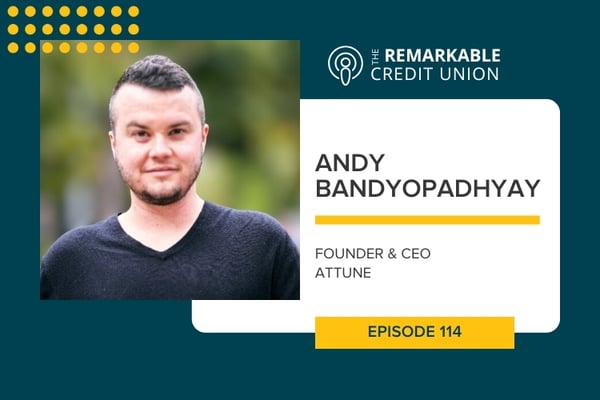
That's precisely why this data should be a driving factor behind your product mix, educational efforts, and outreach strategies. As Andy Bandyopadhyay, Founder and CEO of Attune, put it on The Remarkable Credit Union podcast, credit unions have reams of data on satisfaction, conversions, and financial performance, but the metric that matters most—member financial health—often goes unmeasured. ALICE data gives credit unions a starting point for building a strategy around the members who need them most.
Credit union leaders who are already doing this well aren't just treating ALICE as a talking point. They're using it to reshape products, staffing, marketing, and measurement. Here's how.
1. Using ALICE data to know—really know—your market
The first and most foundational move is simply looking up the numbers for your own footprint. Twenty-two states plus the District of Columbia currently have county-level ALICE data available, and even credit unions outside those states can leverage insights from national reports and local census data.
John Felton, CEO of Southern Chautauqua Federal Credit Union, has built nearly four decades of strategy around serving ALICE members and using ALICE data to drive product decisions. As he pointed out on The Remarkable Credit Union podcast, the data reinforces a simple but crucial principle: know your market, know who you serve, and understand what people need to succeed.
Jim Morrell, CEO of Peninsula Credit Union, takes this even further by giving the persona a name. Peninsula has spent years focused on what Morrell calls "Alice Pearl"—a composite figure representing ALICE households living at or around a survival budget. Rather than juggling a dozen abstract personas, Peninsula trains its entire staff to practice empathy toward one deeply understood person. That specificity turns a demographic statistic into a decision-making tool that shows up in every member interaction.
2. Letting ALICE data shape the product mix—not just the marketing
Once a credit union understands who its ALICE members are, the next step is to ask whether the existing product mix actually serves them. This is where ALICE data moves from insight to action.
At a New England credit union, digging into account data revealed that members earning under $75,000 a year—53% of the membership—were paying 76% of all courtesy pay fees on overdrawn accounts. That single data point pushed the lending team to ask a better question: How can members find alternative cash flow solutions instead of being penalized for running short? The answer showed up in products like payday alternative loans, credit-builder loans, and ITIN lending for members without a Social Security number.
Felton describes this same instinct bluntly: the credit union's job is to develop products less destructive than the aggressively marketed alternatives ALICE members already use, whether that's a predatory payday loan or rent-to-own agreement. That's part of why SCFCU offers loans at 18% to members other credit unions might turn away. While still high, it’s still far better than the 26–29% rates predatory lenders charge, and when paired with real coaching and annual rate reviews, it offers a pathway to financial stability rather than a debt spiral. As Felton put it, hope without action—or worse, false hope—isn't much use, but hope paired with actionable steps is how you change lives.
3. Embedding financial education across products & services
Some of the most effective ALICE-informed strategies treat financial education not as a separate service, but as something baked directly into a credit union’s core offerings. SCFCU’s Kids' Credit Union program is a shining example.
What started as a modest classroom literacy effort—complete with sapling trees to illustrate compound growth—evolved into something far more ambitious after Felton watched a young member proudly save for a bike with her parents' matching contributions. He realized the credit unions had the power to significantly impact a child’s future financial wellness. The Kids’ Credit Union program now guides children with structured savings goals and above-market share certificate rates. If children start in second grade and follow the program through high school, they will graduate with $10,000 or more. As Felton reflected, the goal shifted from changing a summer to changing a life.
Financial counseling embedded across every staff role tells a similar story. At Peninsula Community FCU, every employee—not just one or two dedicated coaches—is a certified financial counselor. Morrell has argued that personal finance is far more personal than it is financial, and that credit unions can't outsource empathy to a single department and expect it to work. When tellers, loan officers, and call center staff all carry that expertise, ALICE members get consistent, judgment-free guidance across all interactions.
4. Measuring financial outcomes, not just financial feelings
Perhaps the most overlooked opportunity in ALICE-informed strategy is measurement itself. It's relatively easy for a credit union to track satisfaction scores or count how many members attended a budgeting workshop. It's much harder—and far more meaningful—to track whether members' actual financial position is improving.
Bandyopadhyay draws a pointed comparison to healthcare: a hospital that only measured patient satisfaction while ignoring recovery rates and readmissions would be missing the entire point of medicine. Financial wellness works the same way. Tools like the Financial Health Network's FinHealth Score Toolkit give credit unions a validated way to measure whether members' savings are growing, debt is shrinking, and bills are getting paid on time—the real indicators of financial health.
This measurement mindset also sharpens how credit unions market to ALICE households. Bandyopadhyay encourages marketers to understand the "job to be done" behind a product rather than leading with rates. A member drowning in student loan debt doesn't need a pitch about a high-yield savings account; they need to hear that the credit union understands that weight and has a concrete way to help—debt consolidation, benefits navigation, or simply timing a loan payment to land after payday instead of before it.
5. Tackling ALICE across sectors
The credit unions who are serious about meaningfully serving their ALICE members recognize that no single institution can solve financial hardship alone. That's where partnerships come in—linking arms with other credit unions, nonprofits, and government benefit programs to expand and deepen impact. Whether it's joining forces to create a regional land bank for affordable housing; forming a benefits-navigation partnership that helps members claim support they're already eligible for; or showing up for members during a natural disaster, mass layoff, or other local crisis before they default on a loan, a partnership mindset recognizes that financial wellness is a community-wide responsibility. All communities will become stronger and more resilient if they focus on reducing hardship across their most financially vulnerable populations.
Final thought
ALICE doesn’t simply represent a “nice to know” data point. It's a lens that can change how you price a loan, staff a branch, design a savings product, and measure success. The credit unions getting this right aren't choosing between mission and margin—they're discovering, as Felton puts it, that you can do well while doing good in your neighborhood.
This article originally appeared on CUInsight.