When Allegiance Credit Union set out to serve the growing Spanish-speaking community in Greater Oklahoma City, they didn't start with a marketing campaign. They started by listening.
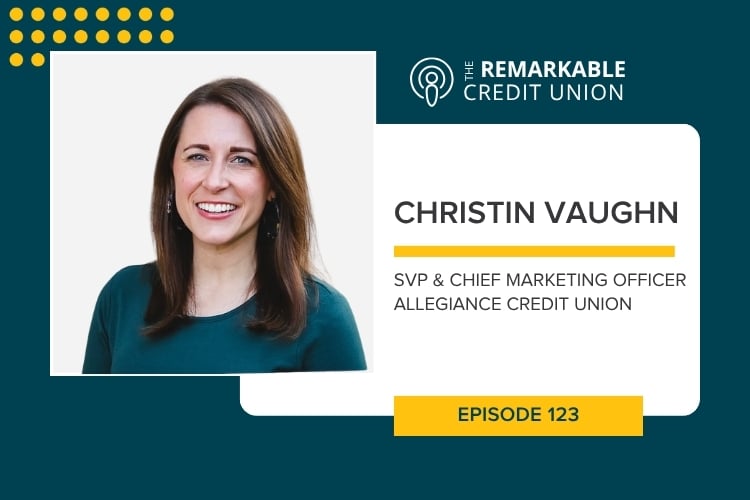
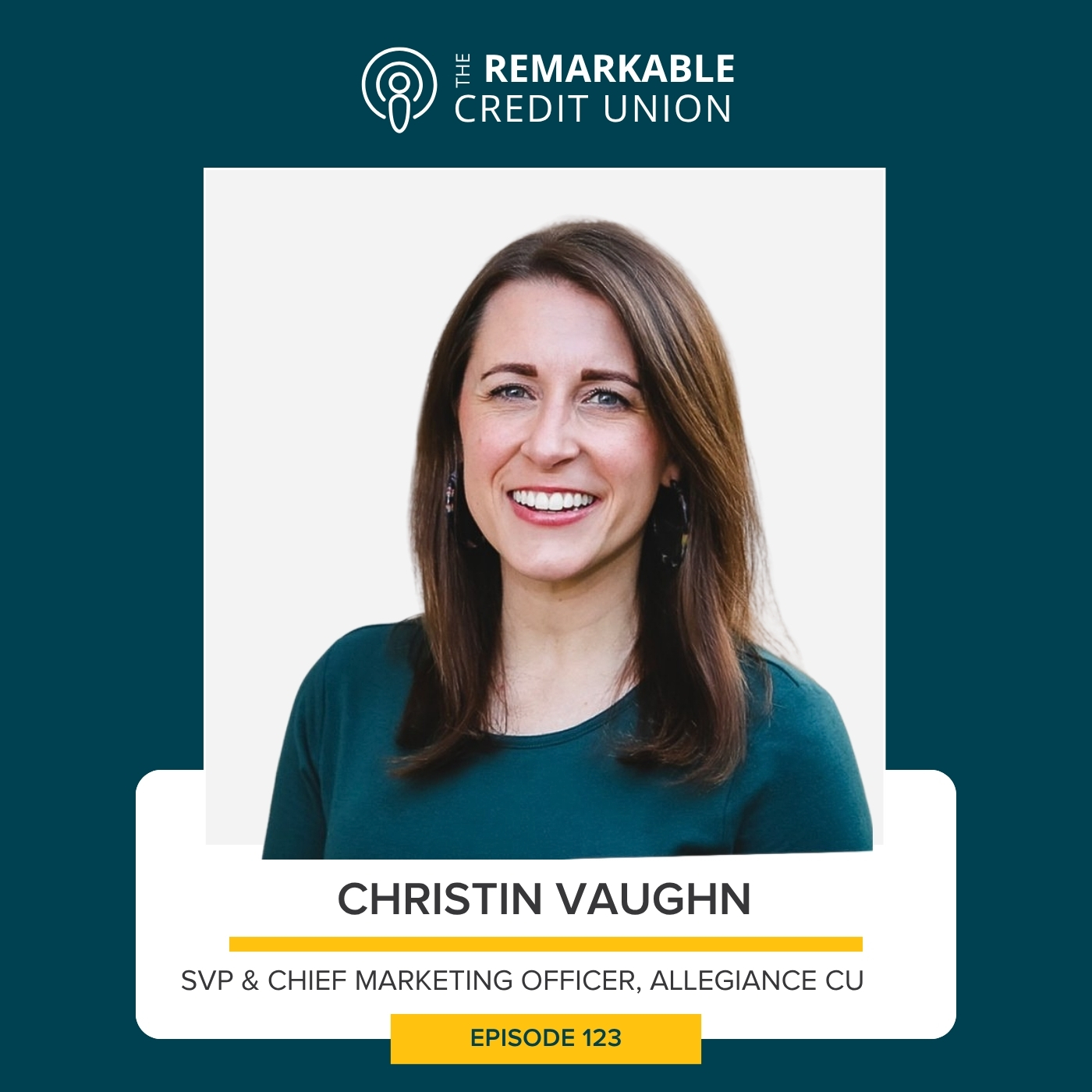
In this episode of the Remarkable Credit Union Podcast, Christin Vaughn, SVP and Chief Marketing Officer at Allegiance, shares how years of community organizing, policy changes, and deep relationship-building led to the creation of Alianza — a fully distinct brand, website, and dedicated branch designed with and for the local Latino community.
This month, we share a story about what it really means to do the hard, unglamorous work of earning trust, and the impressive results that have followed. Together, we unpack this month's BIG question:
How can a credit union reach an underserved community in a way that authentically brings them into the fold and effectively addresses their needs?
Key takeaways:
-
Before you undertake any effort to reach a new market, start by identifying the need and scale. A considerable investment in a new market is only justifiable when there is a meaningful and growing population to serve, and when this population has needs that aren’t effectively being met elsewhere.
-
Build with, don’t market to. To authentically reach an underserved community, you must involve the people you intend to serve and be willing to "build alongside them," not just market to them. This process, guided by the mantra "do nothing about me without me," involves lots of listening, trust-building and meaningful input from the community.
-
Commit for the long-term. Reaching a new market, particularly an underserved market, is not a quick one-and-done campaign. Before you even get to the marketing stage, you must focus on infrastructure first, which involves hiring the right people, removing policy barriers, and ensuring that your tools and resources are accessible. Without this infrastructure in place, any marketing efforts will fall flat or worse, backfire.
Resources & links:
- Alianza by Allegiance Credit Union
- Allegiance Credit Union
- Coopera Consulting
- Inclusiv
- Juntos Avanzamos
- Marketing Association of Credit Unions (MAC)
- Filene Research Institute
- Robot House
- Bancography
Read the transcript:
Katie Stone:
Welcome to another episode of The Remarkable Credit Union Podcast. We created our podcast to help credit union leaders think outside of the box about marketing, technology, and community impact. The Remarkable Credit Union is brought to you by PixelSpoke, a digital marketing agency that works with credit unions to create user-friendly, high-converting, award-winning websites.
As a B Corp and an employee-owned cooperative, we believe that business can and should be a force for good. Each episode, we bring on expert guests from the credit union and broader cooperative movement for conversations about the intersection of marketing and social impact. Our goal is to challenge your preconceptions about business as usual and provide you with actionable takeaways that you can use to grow your membership, improve the financial health of your cooperative, and better serve your community. I'm Katie Stone, CEO and one of the co-owners here at PixelSpoke.
Kerala Goodkin:
And I'm Kerala Goodkin, also a co-owner at PixelSpoke and the Director of Marketing and Impact. And today we're going to tackle a big question, which is how can a credit union reach an underserved community in a way that authentically brings them into the fold and effectively addresses their needs? So to help us tackle this, we're excited to welcome Christin Vaughn. She's SVP and Chief Marketing Officer at Allegiance Credit Union. She's worked there for 17 years and held a variety of positions starting out as a teller. We were just remarking on how she's the second guest this year to start out as a teller that now holds a senior position at a credit union, which is one thing we love about this movement. And Christin is also a certified credit union development educator, best class ever, and serves with me on the board of the Marketing Association of Credit Unions, also known as MAC. Welcome, Christin. So happy to have you.
Christin Vaughn:
Yes. Thank you so much for having me. I'm excited.
Kerala Goodkin:
All right. Before we delve into the how of this big question, let's start with the why, always a good place to start. You have undertaken some pretty extensive efforts to reach a growing Spanish-speaking immigrant population in greater Oklahoma City, which is the region you serve. So I'm just curious going back to the beginning, what initially sparked these efforts and why did Allegiance decide to go in this direction?
Christin Vaughn:
Honestly, it started when some of our own employees started telling us that a lot of their Hispanic family and friends couldn't bank with us because we didn't accept ITINs, which is an individual tax identification number, what non-citizen residents use for federal tax reporting. And that's honestly what woke us up to the realization that there's a gap here and a community we're not serving. There's a fast-growing Spanish-speaking community in Oklahoma City. In fact, OKC's Hispanic population grew by 30% between the 2010 and 2020 censuses. Not only mission alignment kind of moment, but the data was there to support this work.
One of our first steps was to hire Capera Consulting to dive into our current member demographics and the demographics of our current market. Allegiance serves eight counties in the greater Oklahoma City Metropolitan Area, where nearly 22% of our population is Hispanic or Latino and 57% of the largest public school district, the Oklahoma City Public Schools is made up of Hispanic students. So first things first, we changed our policies to allow ITINs and start accepting more forms of ID like the Mexican Matricula. But then instead of jumping straight into a marketing campaign, we worked on earning our Juntos Avanzamos designation through Inclusiv. And then we partnered with a local nonprofit in 2021 to just start listening. We held community meetings, small-group conversations, talking with local leaders.
That's where we learned not only about barriers like language, but about trust and navigating US financial systems. And we also learned about their goals around homeownership, starting business, building generational wealth. Everything was kind of centered around the questions. What would a credit union built by Latinos for Latinos look like and what's currently missing in the existing financial services space? Alianza was born out of those community conversations.
Kerala Goodkin:
Very cool. And we'll get to Alianza in a moment. But first, I love what you said about listening. I think that we've all seen examples of efforts to reach new markets that end up being kind of, as my Gen Z daughter would say, end up being kind of cringe. She usually uses that word to describe me, but they come across as inauthentic or they just kind of fall flat. So if you could talk about that a little more, like what were you looking to avoid or what lessons were you applying either maybe through missteps you took on your own part or just initiatives you've seen at other financial institutions?
Christin Vaughn:
Yeah, for sure. We've all seen efforts that just kind of missed the mark. And for us with this especially, it was about not assuming we knew what the community needed, that translation alone wasn't enough, that the mindset shift was, "Don't market to people, build with them." I had the opportunity to participate in Filene's Racial Economic Equity Incubator a few years ago and saying, "Do nothing about me without me," came up in those classes and that just really resonated with the work that we were doing here with Alianza. So we have just kept the community involved the whole way and let that shape everything from the name itself to the branding to the actual products we offer. And that doesn't mean that we've gotten it right the first time every time, but by starting with that listening first, hiring from within the community, letting their voice shape everything, that's what's helped us remain authentic.
And if we're speaking solely from a marketing perspective, everything is done with input from our bilingual marketing coordinator and then that branch is staff. I don't have the lived experience to represent that brand myself authentically. And so we make sure the voices of the community are heard and that we're always taking that into account from everything that we do.
Kerala Goodkin:
I love, what was it, "Don't do that-"
Christin Vaughn:
"Do nothing about me without me."
Kerala Goodkin:
"Do nothing about me without me."
Katie Stone:
Yeah.
Kerala Goodkin:
I'm going to remember that one.
Christin Vaughn:
Yes.
Kerala Goodkin:
That seems to apply to many areas of life.
Katie Stone:
Yeah. I mean, we hear that kind of mantra a lot, but it's really special when you see a credit union or any organization really embracing it. So I would love to talk more about Alianza. So we have a number of credit union clients who are Juntos Avanzamos-certified as well and even more that have a Spanish language toggle on their websites, but you have really taken that a giant step forward and gone way beyond a Spanish language toggle. You've actually launched an entirely new brand, Alianza, that has its own branding, its own website and its own dedicated branch. I think that is just super impressive and shows your commitment to serving this portion of your membership. Just going back in time, why did you decide to go this route and make this commitment?
Christin Vaughn:
First off, I have nothing against a Spanish toggle on your website. I think that's an amazing... And that's how Allegiance started. Our website initially had a Spanish toggle. But once we got into this work and realized we were going to do it as intentionally as we did, we knew that wasn't going to be enough. So what we kept hearing was a need for trust and something that felt truly built by the community for the community, and that's where Alianza came from. Alianza literally translates to alliance. And so that's kind of the idea and how we show up and operate too from bilingual staff to translated systems and documents, a Spanish phone tree, our products that actually fit the needs of the community, and then hours that reflect real work schedules.
So we wanted it to be a different experience as a whole, not just a different language. So it came with its own brand, and with its own brand, we felt the need for its own website and branch. So just ultimately we chose to build Alianza as its own brand and its own branch and that own website because trust and cultural relevance and accessibility required more than just translation, that it really required intention.
Katie Stone:
Like I said, I really appreciate this commitment and it also sounds like it's not a small amount of work.
Christin Vaughn:
No.
Katie Stone:
I'm sure that there are many challenges that have come up. Can you talk about some of the unintended consequences that maybe you've contended with or how you've worked to resolve those or other challenges that have popped up on this journey?
Christin Vaughn:
Yeah. I'm not sure about unintended consequences per se, but you're absolutely right that an approach such as this presents challenges. Some anticipated, others not so much. Allegiance has a very inclusive culture, so I don't think it took a lot of work to get our people on board as far as the mission piece of this goes, which I'm very proud of the organization I worked for, but it did take work to make sure this wasn't seen as just a side project or a marketing initiative. It really needed full buy-in from our entire organization is this is a strategic goal of the entire credit union. And then externally, when you take an approach like this, people expect you to follow through as they should.
Katie Stone:
Yes.
Christin Vaughn:
And after over three years of the community organizing work that led to our adapted policies and products that we translated all of our documents, we created a new website, we reached that point where we knew it was time to put our money where our mouth was and deliver on a physical branch. So we did a demographic study with Bancography to locate the best place for our branch and had our sites set on a corridor of Oklahoma City that is home to over 40% of Oklahoma County's Hispanic population, but we started hitting a lot of roadblocks when it came to finding a lease space because we were like, "Let's find a building that we can just lease and get into." And thank goodness for our innovative then COO, he's now our CEO, JC Reavis, he had the idea to pivot and purchase a very attractive lot that allowed us to put in a modular building.
Katie Stone:
Oh, okay.
Christin Vaughn:
Yeah. And start serving the community in a fraction of the time it would've taken us to build.
Katie Stone:
I'm sure.
Christin Vaughn:
And the lot we purchased, we were able to put the modular building on one half of it. The place where we're going to build is right next to it. We won't have to shut down service. So it was just very smart approach to this. And it also got us to market nine-plus months before a much larger community bank just got in the exact same location as us. So it let us get our foot in the door first and start serving and meeting those needs that we set out. We're doing all this work to do. And then I'd also be remiss if I didn't acknowledge that the current immigration environment that we're in created additional uncertainty for many in the community, and it was definitely not something we could have anticipated when we began this work in 2020.
We're like, "Wow, we're opening a branch in 2025 that serves the Hispanic community." And there was a lot of, "Oh my goodness," from a strategic business standpoint, it was, "What is this going to do to the numbers and things of that nature?" But it really reinforced why this work was necessary and why building trust and stability matters so much that we didn't say, "Oh man, this may impact how this branch gets going off the ground because we are getting word from the community that people are afraid to leave their homes." So they're not thinking about going and opening a bank account and things of that nature.
But we took the stance of, "There's never a time as this that this was maybe needed as much as it was," instead of the, "Well, dang it, this is not ideal for the business, the business side of things." So a big part has really just been consistency, showing up, pivoting when necessary, and continuing to listen even after the branch opened, which was a year ago this month. We're right at the 12-month mark that we're recording this and continuing to listen even after the branch opened and it's led us to the next step with the permanent brick-and-mortar branch set to open in 2027.
Kerala Goodkin:
Oh, exciting. Very exciting. Yeah.
Christin Vaughn:
Yes, very exciting news. That's brand-new news.
Kerala Goodkin:
I'm actually curious with just the current environment, was there concern about pushback from other members who aren't part of the Spanish-speaking community?
Christin Vaughn:
Surprisingly, no.
Kerala Goodkin:
Oh, great.
Christin Vaughn:
[inaudible 00:13:13] glad to report.
Kerala Goodkin:
Yes.
Christin Vaughn:
Of course, we prepared for that and had a lot of talking points ready in case we got pushback of, "Well, what about us or what about me?" But we, I say Allegiance has a very inclusive staff and culture. I think it kind of extends to our membership too somewhat, which I mean, we're big supporters of pride and that's something that there's an alignment there between just being a credit union for all. That's our tagline, Allegiance, a credit union for all. And so no, maybe one small comment here or there, but no big blowback, nothing online. We didn't see members say, "I'm closing my account because this isn't..." Nothing of that nature.
Katie Stone:
That's great to hear.
Kerala Goodkin:
Yeah, it's really encouraging. And from a marketing standpoint, well, actually I'd be curious first just to hear a little bit more about the decisions that went into branding this initiative. We talked about Alianza is Spanish for alliance, not Allegiance. So it's a different name, still starts with an A, but yeah, I'm just curious what considerations went into the branding, and then just what are the challenges of managing a whole separate brand, kind of newer brand alongside a more established brand, but also some of the opportunities that that opens up as well?
Christin Vaughn:
As far as how the brand was developed, so the brand was actually developed in 2022, 2023, so years before the actual branch came to be. We did hire a local creative agency here in Oklahoma City, but we used the community members that were part of this community organizing group. They called themselves the Centuriones. It was a group of a hundred that were the main community stakeholders. Again, they named themselves, they came up with the name Alianza.
Kerala Goodkin:
Oh, nice.
Christin Vaughn:
So this was a real practice in relinquishing control of your organization's outcome for all of us, not just for marketing. So we really like this creative agency's process. They're called Robot House, I'm sure they work with people outside of Oklahoma, and they go through a process of surveys and it's really in depth. And so we didn't take the surveys, only the community members did. And then I did get to sit in on the meetings just to be a fly on the wall. And then if there was any questions regarding Allegiance, because obviously Alianza is a branch and a sub-brand of Allegiance, so there needs to be some alignment there. But I had no say in the colors or the visual imagery or what... It was really this group of, there was a broader group that did the survey and then they narrowed it down to eight or nine people that were the key drivers of the rest of the process.
But it truly was born of, "These are the colors they like, these are the visuals they like, this is the language they said that, and the copy, that resonated with them and what they wanted Alianza to stand for." And we were just kind of a bystander watching this process from the outside looking in. But as far as specific challenges to managing the two, it's where should I begin? One challenge is clarity, making sure both brands stay distinct but align because it's a real Catch-22 between, "Okay, we made this to be its own thing so that it really spoke to a certain community and was a niche marketing type of thing," but then it's confusing. People don't understand that it's a part of Allegiance Credit Union and that you are an Allegiance Credit Union member when you bank at Alianza.
So 17 years of being in credit union marketing space, this has by far been the biggest challenge of my career, but in the best possible way. We stand by our decision to differentiate this branch, but we recognize the importance of communicating that Alianza is a branch of Allegiance Credit Union and that's really come along since we've been live. I want to say before the branch was open, we were more focused on it has to be different. That was the whole point. It has to be its own thing. And now we've learned with the branch being open, it's got to be more blended than we originally thought because showing that Alianza is a branch of Allegiance Credit Union shows stability and instills trust.
Kerala Goodkin:
Yeah,
Christin Vaughn:
One example, where we put this into place was we did a wrap on our modular building to try and make it look a little bit nicer and it was designed by a local Latino artist and it only had Alianza branding on it. But about six months in we realized because people would be like, "What is that? A restaurant?"
Kerala Goodkin:
Yeah.
Christin Vaughn:
And, "Who's Alianza?" When you think about trust, is this a new fly-by-night financial company and a temporary modular building?
Kerala Goodkin:
Totally. Yeah, that's a good point.
Christin Vaughn:
There could be some misconceptions there. And so we went and changed a part of the building and put Allegiance's logo on there. So it has Alianza big, but then there's an Allegiance logo very clear and says, "Since 1963" to show that stability and instill trust. And my marketing coordinator's really started, we took feedback from the branch staff that that was a talking point that was coming back, people not understanding like, "Who are you? What are you?" Kind of thing. So we really tried to be like, "Alianza," it was like, "For you, buy you, however, we're a part of this bigger thing that has a lot of stability and that kind of thing." So that's kind of a specific example of somewhere where we pivoted per se on how, "Okay, they don't need to be as separate as maybe we initially set out."
So our strategy and approach will continue to evolve as we receive feedback through trial and error like the building signage, but we'll just make sure the commitment from the beginning will remain the same. How do we serve intentionally hand in hand with the community? Are we living up to the promise of providing opportunity and resources to those who have historically been overlooked? And so honestly, just this entire initiative has been a huge opportunity and learning experience for our entire credit union. It's helped us rethink the member experience in ways that are now influencing our organization as a whole. The success we've seen from increased community engagement and focus around our Alianza branch, because of course, it's a new branch, new brand. We were putting in all these efforts there. There's been a lot of success there.
And so it's challenged us to think how have we maybe let things slide around some of our more established branches like, "What can we do to really step up our game there and that that type of marketing still works when done right and when done strategically?" Because we at Allegiance have a very digital first approach to marketing due to our size, that's easier for us to scale, but it just has made us open our minds back to in a post-COVID world where it took us from not being as many things out in the community that it's like, "Oh, we need to get back boots on the ground. Where can we have that impact around our other branches too?"
Katie Stone:
I have a couple of nuts-and-bolts questions about the two brands. So do both brands have the same products you offer or are there any differences between the two?
Christin Vaughn:
No, everything has the same products, so we don't have anything that's... So yeah, that would be very complicated.
Katie Stone:
Yeah. Yeah. Okay. And then what about plastics? Do the-
Christin Vaughn:
We do have an Alianza debit card. Yes.
Katie Stone:
Okay.
Christin Vaughn:
So that is an option. I mean, again, banking at Alianza is being an Allegiance Credit Union member. Everything is on the same core, the same online banking platform.
Katie Stone:
Got it.
Christin Vaughn:
We do have the ability to do different experiences in our online banking.
Katie Stone:
Oh, okay.
Christin Vaughn:
So if you open your account at Alianza and you say that you're Spanish-preferred, we will put you into the Alianza experience. And so you still download the Allegiance Credit Union app, but once you log in, everything changes to Spanish and Alianza branding. So we've got some of those types of things put into place. But yes, there is a debit card. And I mean, someone who went and opened an account in an Allegiance branch that is an English speaker, they can have an Alianza card too. It's literally just in one of our options. It's just a choice of we have an Alianza design card in addition to our Allegiance ones.
Katie Stone:
Cool. Great. Thanks for answering that. I just had those curiosities. All right.
Kerala Goodkin:
Katie.
Katie Stone:
Yeah.
Kerala Goodkin:
I was wondering if you remember, I think you were at this Juntos Avanzamos event with me. There's often an event in Portland with Juntos Avanzamos-certified credit unions and a local credit union, Unitus, talking about listening to the community and how that informs your branding efforts. They were undergoing a rebrand and yellow had been one of their primary colors and they were kind of demoting it in the rebrand and it wasn't going to be a central color anymore. And then they learned that a lot of the Spanish-speaking members of the immigrant community that they were really increasingly serving and dedicated to serving referred to Unitus as Banco Amarillo, the yellow bank.
Katie Stone:
Yeah.
Kerala Goodkin:
Luckily they learned that before launching the new brand, but they're like, "Yeah, we got to put yellow back in here."
Christin Vaughn:
Exactly.
Kerala Goodkin:
So it just goes back to the importance of really listening to the community during that process.
Katie Stone:
Definitely.
Christin Vaughn:
And we love the Alianza brand. And anyone listening to this, I encourage you to go look. It's beautiful. We will sometimes be like, "Dang, we like Alianza's brand better than Allegiance." Internally, we're like, "It's beautiful." And we love our Allegiance brand too. We did a refresh a few years ago and we've got some more fun colors and stuff going on. But yeah, the Alianza brand is very beautiful. The agency we hired did a great job and then the community did a great job of creating that.
Kerala Goodkin:
We'll definitely include a link in our show notes to both brands for sure.
Katie Stone:
Yeah. All right. So I'd love to jump to results. So how are you measuring the success of this initiative and what successes have you been able to celebrate so far?
Christin Vaughn:
Well, of course we track the usual things, new members, loans, product usage, but we also kind of looking at trust, are they bringing in family and friends? One of the biggest wins that we've seen has been the word of mouth growth or something that has felt like a big win to us. 45% of accounts opened in the first 10 months came from referrals, whether other members or our own employees. And so that just kind of reinforces that you're doing something right if other people are referring you. But because I know some listening want feel facts and figures to measure success of something that they're imagining took a lot of time and money and effort, our Alianza branch accounted for 57% of all new Allegiance members in 2025 despite only being open nine months of the year.
Katie Stone:
That's incredible.
Christin Vaughn:
Yeah, we have four branches for context.
Katie Stone:
Wow.
Christin Vaughn:
And yes, that's the other thing I share with people. For those that don't know Allegiance Credit Union, we have four branches and we're usually in the $360 million asset size range, $360, $370. So we're not a big shop by any means. And so I like to share that with people so that, because I know sometimes as somebody who's not from a big shop, when I hear other people talking about things that seem very grandiose, I'm like, "We could never do that." And so I do like to challenge people to not have that mindset that you can do big things like this despite not being a billion-plus dollar shop.
Kerala Goodkin:
Yeah. So I was going to ask if you'd recommend that other credit unions take this approach, but I think a better way to phrase this question is under what circumstances or for what kinds of credit unions might you recommend this approach? Because it might not be for everyone.
Christin Vaughn:
Yeah, for sure. I don't think it's necessarily for everyone, but I think first you need to start by identifying what groups are being left behind in your community and then be realistic about the scale. This kind of investment works when there's a meaningful and growing population to serve. If this were a much smaller segment of our community, it would be harder for us to justify the level of investment that we've done. But for us here in Oklahoma City, we saw both the clear need and the ability to make an impact. So you kind of have to start there like, "Where are those overlooked groups in your community?" And that there is a scale that makes sense.
And then from there, I would only take this route if you're really willing to commit. I feel like repeating things a lot, but this isn't a quick campaign. It takes time, takes investment, takes a willingness to do things differently, not just say things differently. But if it's truly aligned with your admission, it can be incredibly impactful and you just absolutely have to focus on infrastructure first, hiring the right people, removing those barriers from your policies, translating documents and digital platforms. Then you can focus on getting the word out that you're equipped to serve because it just doesn't make sense to go to an event that the Hispanic community is going to be a part of if you don't have the bilingual staff to support that or-
Kerala Goodkin:
Right. Very good point.
Christin Vaughn:
So it's just like you have to really think about infrastructure first. And this has been a year's long process for us to get to a dedicated brand and branch, like five-plus years in the making, not an overnight thing.
Kerala Goodkin:
Makes a lot of sense.
Katie Stone:
If there was one word I would use to describe everything I'm hearing today would be that word, commit. I mean, it just is clear to me that you all decided to go a direction and you committed 100% to it and stayed on that track even when things were challenging. So that's really impressive.
Well, I'd love to pivot to some rapid fire questions. These are just for fun. So to start with, if you could travel back in time, what period would you go to?
Christin Vaughn:
I always struggle with questions like these. I'm a very indecisive person.
Kerala Goodkin:
Me too. I'll admit.
Katie Stone:
Must be a Libra.
Kerala Goodkin:
Yeah.
Christin Vaughn:
Yeah, I am.
Katie Stone:
Yeah. See?
Kerala Goodkin:
So am I. Yeah, I'm you. We're all Libras.
Katie Stone:
Yep.
Christin Vaughn:
Oh, that is funny. But I guess since young me dressed up as a hippie for Halloween on more than one occasion, I'll go with the '60s. It was a great decade for music too, so I'll be the peace-loving hippie.
Katie Stone:
Very good. All right What is the best advice you have ever received?
Christin Vaughn:
Best? That feels like a lot of weight, but one piece of advice that has stuck with me and something that I always go back to is that your strengths when overused can become your weaknesses. So self-awareness really matters. It's about balance and knowing when to dial something up, when to dial it down. So I'm just constantly keeping that. And then it goes the other way too. Anytime you're maybe down on yourself for a perceived weakness that you have. But it's like the flip side of that is there's a real strength that comes from that.
Kerala Goodkin:
Well, we Libras are all about balance, so that's great advice.
Katie Stone:
That's right. All right. And finally, what is something that you could eat for a week straight?
Christin Vaughn:
Well, I do have a thing with getting hyper-fixated on food, so it's like I will go through phases of eating the same thing for a long period of time until I get sick of it. So while a little random and somewhat boring, lately I've been eating a lot of sweet potatoes with cottage cheese and bagels with cream cheese. Those are bins. And then you can never go wrong with chips and queso. So basically the pattern I'm picking up on is a lot of carbs and cheese combos because I can repeat a lot of carbs and cheese.
Katie Stone:
I don't know if that's a Libra thing, but that resonates with me too.
Kerala Goodkin:
I think it might be a mostly human thing. I often joke, I should only serve carbs and cheese for dinner and my kids would eat every dinner I make. I don't know why I bother with these other things. But all right, let's do our final take. So as a reminder to our listeners, our big question today was how can a credit union reach an underserved community in a way that authentically brings them into the fold and effectively addresses their needs? So in just a few sentences, can you summarize your thoughts on this question?
Christin Vaughn:
If you want to authentically reach an underserved community, you have to involve the communities you intend to serve. Start by listening and be willing to build alongside them. That means investing in people, adapting your operations, not just your messaging, and showing up consistently. You will never feel fully ready, so starting small is better than not starting at all. And when you remove barriers and build trust over time, you're not going to just gain new members, you're creating pathways to opportunity and long-term financial wellbeing in your community. And that's what credit unions are supposed to be all about.
Kerala Goodkin:
Oh, beautifully said. Thank you. I'm so glad we finally had you on. You've been on my list for a while. I've been really impressed with this initiative and I attended your session at the last MAC conference, quick plug for upcoming MAC conference in September. But yeah, that made me even more impressed with just the depth and scope of this initiative. So it was fun to learn even more about it. Thanks for joining us.
Katie Stone:
Yeah. Thank you.
Christin Vaughn:
Of course. Thank you so much for having me.
Kerala Goodkin:
All right. Well, what a rich conversation. So as far as key takeaways, I'd say to start, before your credit union undertakes any effort to reach a new market, regardless of what that market might be, it's really important to start by identifying the need and the scale. So a considerable investment in a new market is only justifiable when there's a meaningful and growing population to serve, but also when this particular population has needs that aren't effectively being met elsewhere.
Secondly, probably one of my favorite takeaways from this conversation is build with, don't market to. To authentically reach an underserved community, you have to involve the people you intend to serve. You have to be willing to build alongside them, not just market to them. I loved the mantra Christin mentioned, "Do nothing about me without me." And that involves lots of listening, lots of trust building and lots of meaningful input from the community.
And lastly, it's really important to commit for the long term. This isn't a quick one-and-done campaign. There's a lot that has to happen before you even get to the marketing stage, a lot of infrastructure that has to be put in place. It involves hiring the right people and removing policy barriers and ensuring that your tools and resources are accessible to the population you intend to serve. And without this infrastructure in place, any marketing efforts you undertake are probably going to fall flat, or worse, backfire entirely.
All right. Well, thanks for joining us today for another great episode. The Remarkable Credit Union is brought to you by PixelSpoke, a digital marketing agency that works with credit unions to create user-friendly, high-converting, award-winning websites. As a B Corp and employee-owned cooperative, we believe that business can, and should be, a force for good. You can learn more and check out our work at pixelspoke.coop. That's PixelSpoke, all one word, dot coop. Until the next time, I wish you the best of luck in making your credit union remarkable.